

 Gardening Editor
Sophia
Sophia focuses on indoor plants, gardens, and composting with beginner-friendly guidance.
See more from Sophia
•
1 Comment
•
Verified by EcologyMag Team
Gardening Editor
Sophia
Sophia focuses on indoor plants, gardens, and composting with beginner-friendly guidance.
See more from Sophia
•
1 Comment
•
Verified by EcologyMag Team
Written by Sophia. This article may include some images sourced from third-party sites to support content quality. For full details, see our Image Credits page.
I stood at my back door on a last Sunday morning and felt stuck. The yard was there, the space was there, but a clean and simple backyard patio design felt like something that happened in other people’s homes. Not mine.
I had been scrolling through Instagram for weeks, saving images without understanding why certain yards made me stop.
I started paying attention to what those spaces had in common.
I cleared my backyard one weekend and stood in the empty space for a long time. Just stood there, looking at the grass and the fence and the sliding door.
That was the shift.
The first thing I noticed was that I had no defined surface at all. The grass blurred into a vague patch of nothing with no edges and no center. Every patio image I loved had one thing: the moment you looked at it. A clear surface that said, ” This is where life happens.
I started researching layouts instead of accessories.
I tried five different approaches over two seasons. Some cost money, and some cost almost nothing.
A clean and simple backyard patio design is not about minimalism for its own sake. But making every decision count so the space feels resolved instead of random.
A Covered Outdoor Room That Finally Treats the Backyard Like an Indoor Space
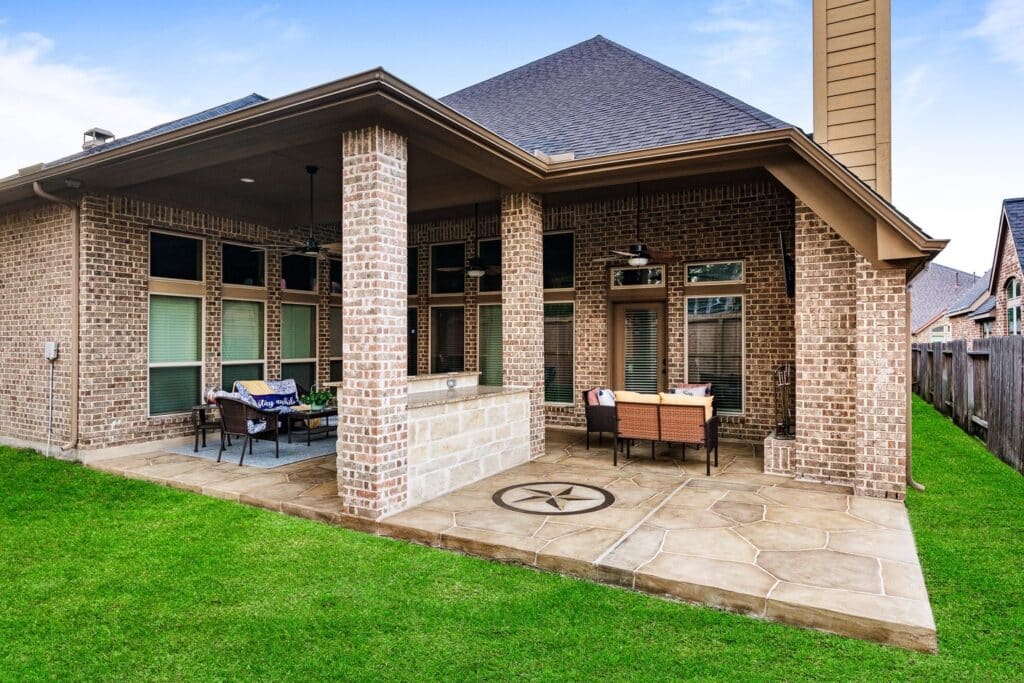
A covered patio with a solid overhead structure is one of the most underused layouts in residential backyards. Most homeowners treat it as a transitional space, somewhere to walk through rather than somewhere to actually live. When it is treated like an indoor room with defined zones and real furniture placement, the entire backyard shifts in feeling.
The key is dividing the covered space into two clear areas rather than filling it with one large seating arrangement. A dining zone on one side and a lounging zone on the other creates natural flow and gives every visit to the patio a different quality. Eco outdoor seating in weather-resistant materials keeps both zones functional across every season without constant maintenance.
Ceiling fans already installed in a covered structure are a feature most people forget to use intentionally. Running them in summer makes the space genuinely comfortable during hours when an uncovered patio would be abandoned. The overhead structure itself does something psychological that open patios cannot; it signals that you are in a room, which makes the space feel finished and purposeful rather than accidental.
A clean and simple backyard patio design like this works because the bones do all the heavy lifting. The cover, the floor, and the two defined zones create a complete outdoor room before a single cushion or plant arrives.
A Paver Surface With Built-In Seating That Needs Almost Nothing Else
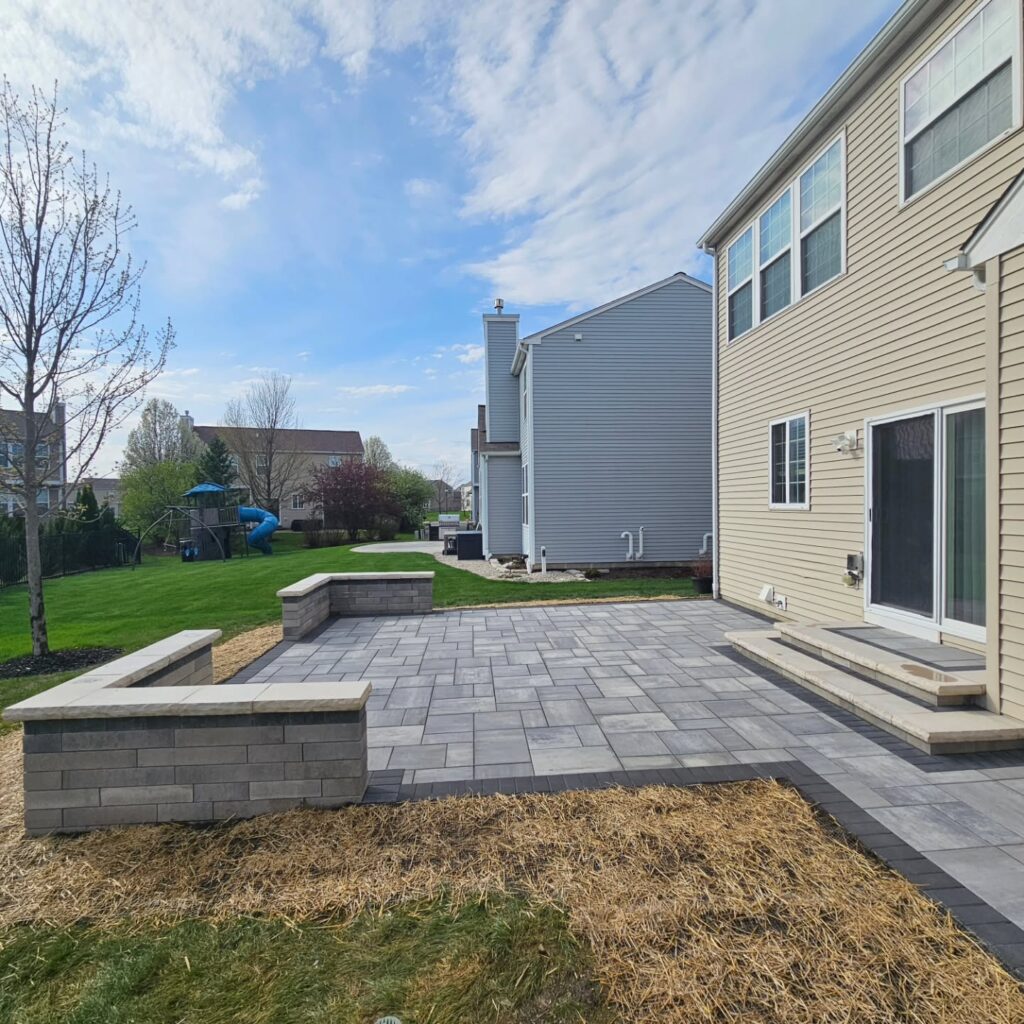
A strong paver layout is one of the most reliable approaches to clean and simple backyard patio design because the surface itself becomes the design. The pattern, the color, and the defined border of a well-laid paver patio create a finished look that no amount of furniture or decoration can replicate from scratch. Large-format pavers in a single neutral tone are the most consistently effective choice across different yard sizes and styles.
The built-in block wall seating that frames two sides of this layout solves three problems at once. It defines the edge of the patio clearly, it provides seating without adding freestanding furniture, and it gives the whole space visual weight that makes it feel permanent rather than temporary. A paver patio with this kind of integrated border reads as a real architectural feature rather than a surface dropped onto the grass.
The most important thing about this layout is what it does not need. No planters along the edge, no rugs, no lanterns, no accessories of any kind are required for the space to feel complete. The surface and the border do everything, which is exactly what the best clean and simple backyard patio design layouts always have in common.
Getting the paver installation right matters more than the price of the pavers themselves. A consistent, well-jointed surface with clean edges will outlast and outperform a more expensive material that was not laid properly.
A Fire Pit Layout That Gives Every Outdoor Space a Genuine Center
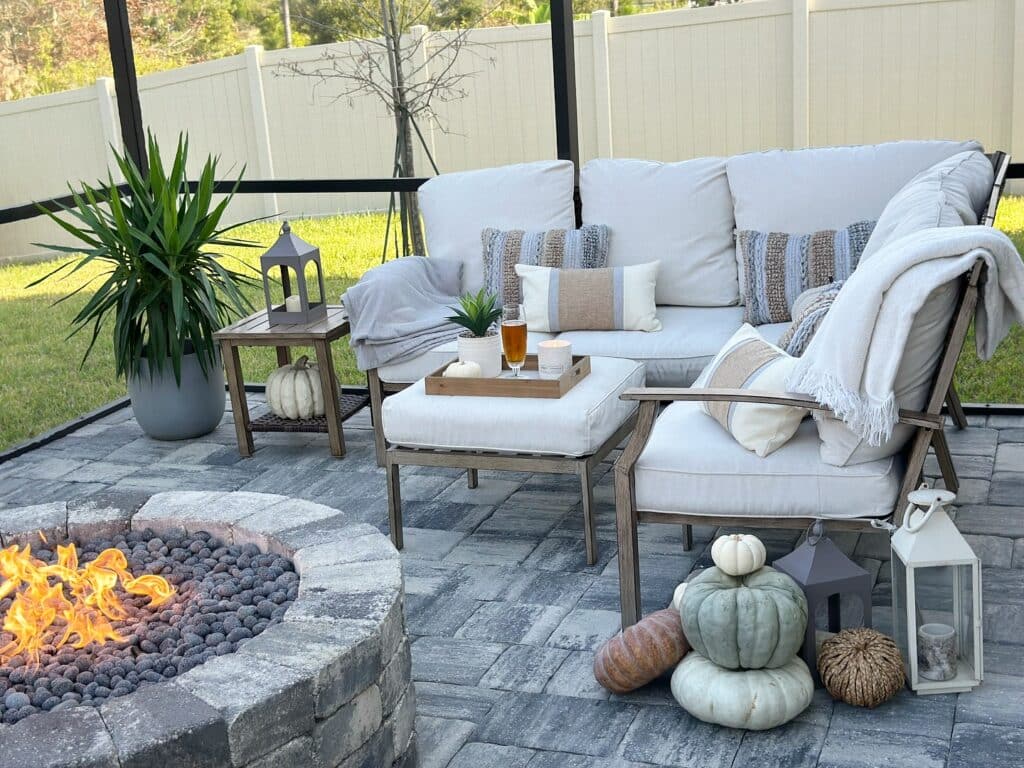
A built-in fire pit changes the logic of an outdoor space in a way that no other single feature can match. Without a focal point, patio furniture tends to float, arranged in a shape that feels arbitrary and never quite right. When a fire pit sits at the center, seating arranges itself naturally around it, and the whole layout immediately makes sense.
A stone fire pit set into the paver floor rather than placed on top of it is the detail that separates this layout from a portable fire feature. The permanence reads differently; it looks like the patio was designed with this center in mind from the beginning. Lava rock fill keeps the aesthetic clean and works with neutral cushions and soft throws without competing for attention.
This approach to a simple backyard patio design works especially well because it solves the after-dark problem that most patios never address. A space with no center loses its purpose when the sun goes down. An eco fire pit backyard layout keeps people outside longer because the fire itself becomes the reason to stay.
Lanterns placed at ground level around the seating area add warmth without the visual noise of string lights. The restraint in the styling is what makes this layout feel considered rather than decorated.
An Indoor to Outdoor Dining Layout That Makes Both Spaces Feel Bigger
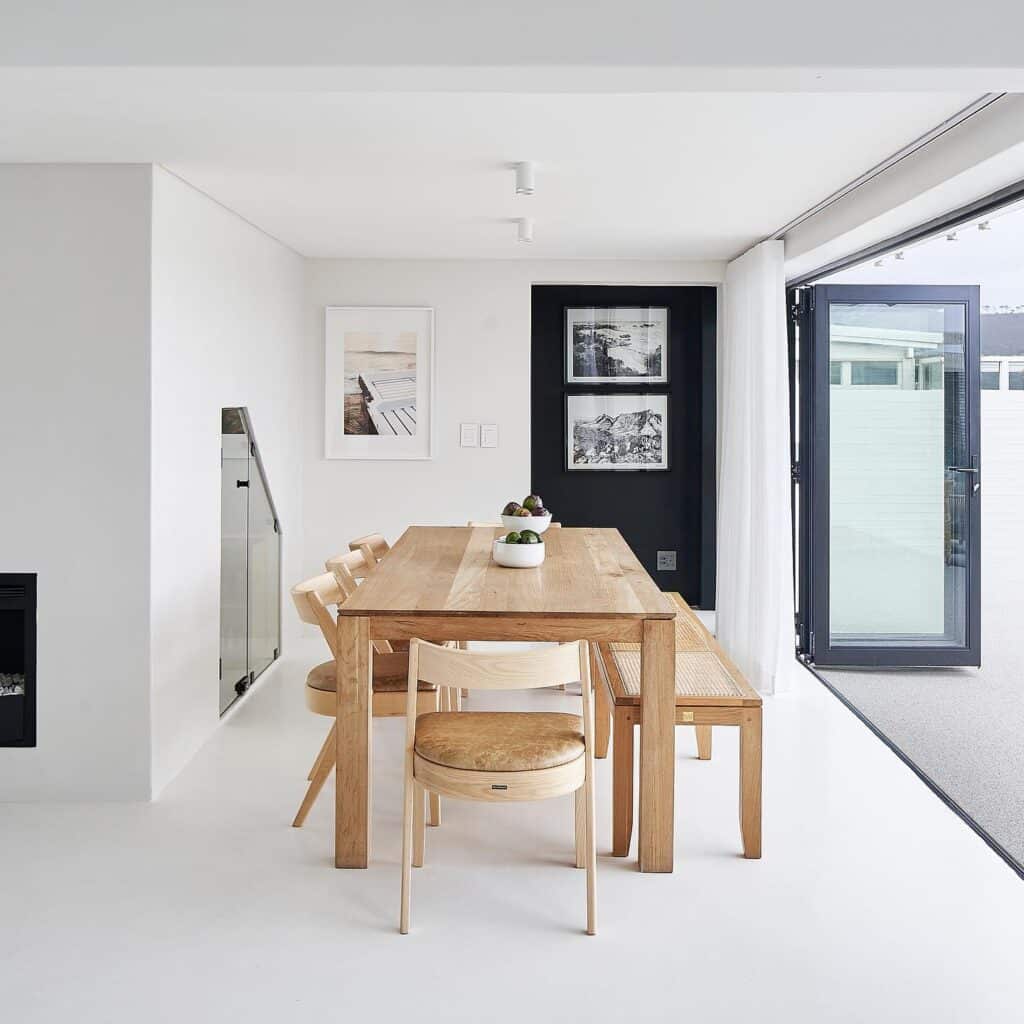
Opening the wall between an indoor dining room and the backyard is one of the most effective layout decisions available to any homeowner. Both spaces get larger without moving a single piece of furniture. The visual connection between inside and outside changes how both rooms feel throughout the day, not just when the door is open.
A simple wood dining table positioned near a large glass opening becomes part of two worlds at once. The eco dining room decor principle that applies here is keeping both sides of that threshold in the same neutral palette. When inside and outside share a color language, the eye moves between them without stopping, and the overall space reads as one connected area rather than two separate rooms.
A white floor and pale natural wood inside hold the interior calm in a way that amplifies rather than competes with the view outdoors. This is a clean and simple backyard patio design principle applied from the inside out. The outdoor space does not need to be heavily styled when the interior frames it this clearly.
The glass wall or folding panel that makes this layout possible is an investment, but the spatial effect it creates is permanent. No furniture arrangement or accessory purchase delivers the same result.
A Front Porch Layout With Defined Zones That Earns Its Place Every Day
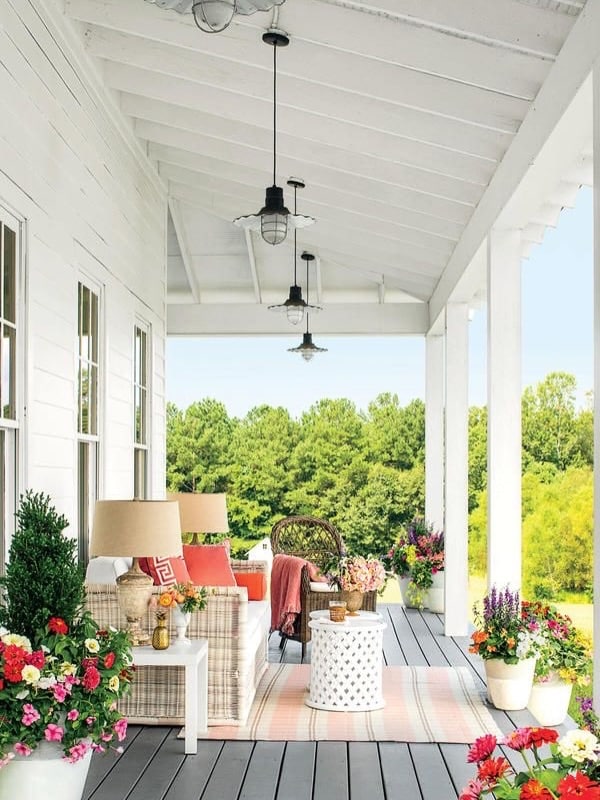
A front porch with a proper layout works differently from a front porch that was simply furnished. The layout creates a reason to be there, a defined sitting zone with clear edges that signals this is a place, not just a transition between the street and the front door. A rug placed under the seating area is the single most effective way to establish that zone without building anything.
Pendant lights hung from the ceiling give the porch vertical presence and make the space genuinely usable after dark. The height draws the eye up and makes the ceiling feel intentional rather than incidental. Eco porch decor that focuses on real plants in good quality pots along the edge softens the architecture without adding visual clutter.
A cottage garden approach to those edge planters, with flowers spilling slightly over the pot rim in natural clusters, gives the porch life without making it feel overdone. The editing principle matters here as much as anywhere in backyard patio design. One confident planter is worth more than four average ones placed without intention.
Wicker seating with a side table between chairs completes the zone without crowding it. The restraint in this layout is what makes it feel welcoming rather than staged.
Why the Surface Always Comes Before Everything Else in Outdoor Design
The most common mistake in backyard design is skipping the surface decision and going straight to furniture and accessories. A patio that looks unfinished almost always has a surface problem underneath everything sitting on top of it.
A clean and simple backyard patio design starts with the ground and works upward from there. The surface defines the boundary of the space, which tells you how much furniture it can hold.
The sequence that works consistently is surface first, structure second, furniture third, and accessories only after everything else is already resolved. Reversing that order is what creates the cluttered, unfinished feeling that most people keep trying to fix by adding more things. The fix is almost always to go back to the beginning and sort the surface out properly.
A clean and simple backyard patio design at its best is invisible. The layout does its work quietly, and the space feels calm and complete without drawing attention to any single element. That is the standard worth working toward in any yard, regardless of size or budget.
Covered Patio: Divide into two zones, one for dining and one for lounging. Use the existing ceiling and fans before buying anything new.
Paver Patio: Choose large format pavers in one neutral tone. Add a built-in block border or low wall to define the edge and add seating without extra furniture.
Fire Pit Layout: Set the fire pit into the floor as a permanent anchor. Arrange seating around it and keep styling minimal so the fire remains the clear center.
Indoor to Outdoor Dining: Keep both sides of the glass threshold in the same neutral palette. Let the outdoor view do the decorating rather than styling both spaces independently.
Front Porch Layout: Define the sitting zone with a rug. Add one overhead light and edited planters at the edge.
The yard rarely feels finished all at once, and that is not a problem worth rushing to solve. Getting the layout right first means every decision that follows it has somewhere solid to land.

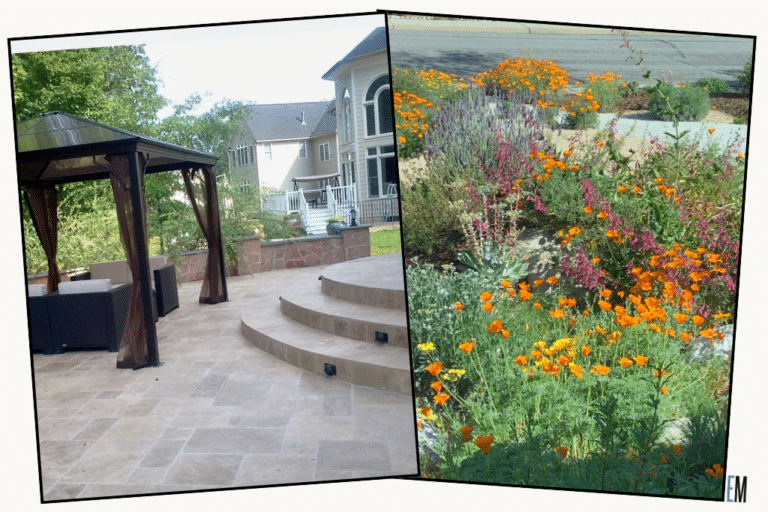
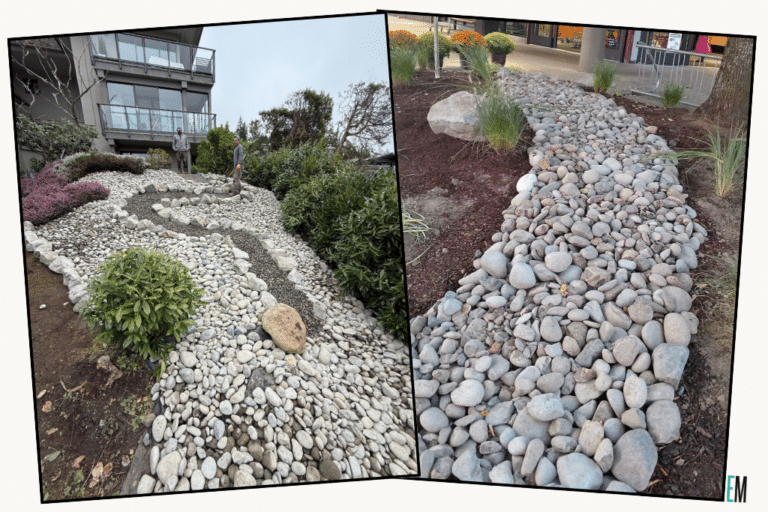

[…] Sustainable patio design is not just about materials. It is about designing a space that you will actually use every day, which means it will not be abandoned by next August. […]