
 Gardening Editor
Sophia
Sophia focuses on indoor plants, gardens, and composting with beginner-friendly guidance.
See more from Sophia
•
0 Comments
•
Verified by EcologyMag Team
Gardening Editor
Sophia
Sophia focuses on indoor plants, gardens, and composting with beginner-friendly guidance.
See more from Sophia
•
0 Comments
•
Verified by EcologyMag Team
Written by Sophia. This article may include some images sourced from third-party sites to support content quality. For full details, see our Image Credits page.
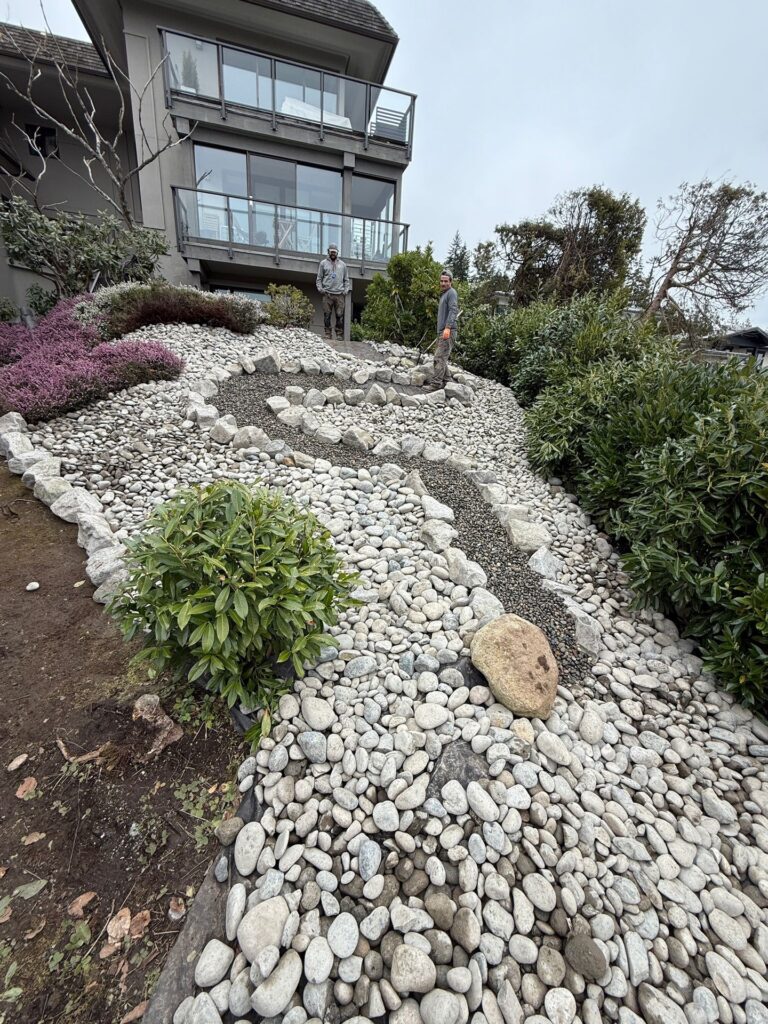
The summer I pulled up my last bag of dyed mulch and replaced it with river rock eco landscaping I had been saving for months, I did not expect the yard to look this calm.
I had been fighting mulch for years. It would float during heavy rain, fade to an odd grey by August, and need replacing every single season. The cost added up. The waste bothered me. And honestly, it never looked as clean as I wanted it to.
River rocks changed that, to be honest with you.
In this article
- Why I Finally Walked Away From Mulch and Chose River Rock Eco Landscaping Instead
- The First River Rock Eco Landscaping Idea That Worked Better Than I Imagined
- How I Used River Rock Eco Landscaping Around My Raised Garden Beds
- The Dry Creek Bed That Solved My Drainage Problem Without a Single Chemical
- How River Rock Eco Landscaping Around My Patio Edge Made the Whole Space Feel Finished
- The Shaded Corner That Finally Made Sense With River Rock Instead of Struggling Plants
- Using River Rock Eco Landscaping to Border My Herb Beds Near the Kitchen Door
- The One Thing I Got Wrong Before I Got It Right
Why I Finally Walked Away From Mulch and Chose River Rock Eco Landscaping Instead
Mulch made sense in theory. Moisture retention, weed suppression, soil insulation. All of that is real. But in practice, organic mulch in my yard became a seasonal headache.
River rock, by contrast, does not decompose. It does not blow into the lawn. It does not attract the particular kind of fungus that once colonized my entire front bed after a wet spring.
And from an eco perspective, buying river rock once and using it for a decade is more sustainable than buying bags of mulch every year.
The First River Rock Eco Landscaping Idea That Worked Better Than I Imagined
I started with the strip along my front fence. It was a narrow, awkward space that mulch had never filled convincingly.
I laid a single layer of weed barrier fabric, which I chose specifically because it was a recycled polypropylene option, and then covered it with small smooth river pebbles about 1 to 2 inches across.
The result looked like something from a sustainable front yard landscaping spread in an architecture magazine
That strip has needed zero maintenance in two years. Two years. That alone sold me on the concept entirely.
How I Used River Rock Eco Landscaping Around My Raised Garden Beds
My raised beds sit on a gravel base, and the path between them used to be bare dirt. Every time it rained, that path turned into mud. I tracked straight into the kitchen.
I filled the paths with medium-sized river rocks, roughly 2 to 3 inches. They pack together just enough to feel stable underfoot but still allow water to drain through naturally.
This is genuinely one of the best eco backyard garden decisions I have made. The water drains into the soil rather than pooling on the surface, which actually benefits the plants nearby.
And it looks beautiful in a way that bare dirt or mulch paths never did. The grey-blue stones against the wooden raised beds feel almost Scandinavian in their simplicity.
What to Lay Underneath Before You Place the Rocks
Do not skip the base layer. I made that mistake in one corner of the garden.
A simple recycled landscape fabric works well. Some people use a thin layer of sand first, which helps the rocks sit more evenly.
The Dry Creek Bed That Solved My Drainage Problem Without a Single Chemical
One side of my yard slopes slightly toward the house. During heavy rain, water would collect along the foundation, and I had tried everything from expensive drainage channels to DIY berms that never looked right.
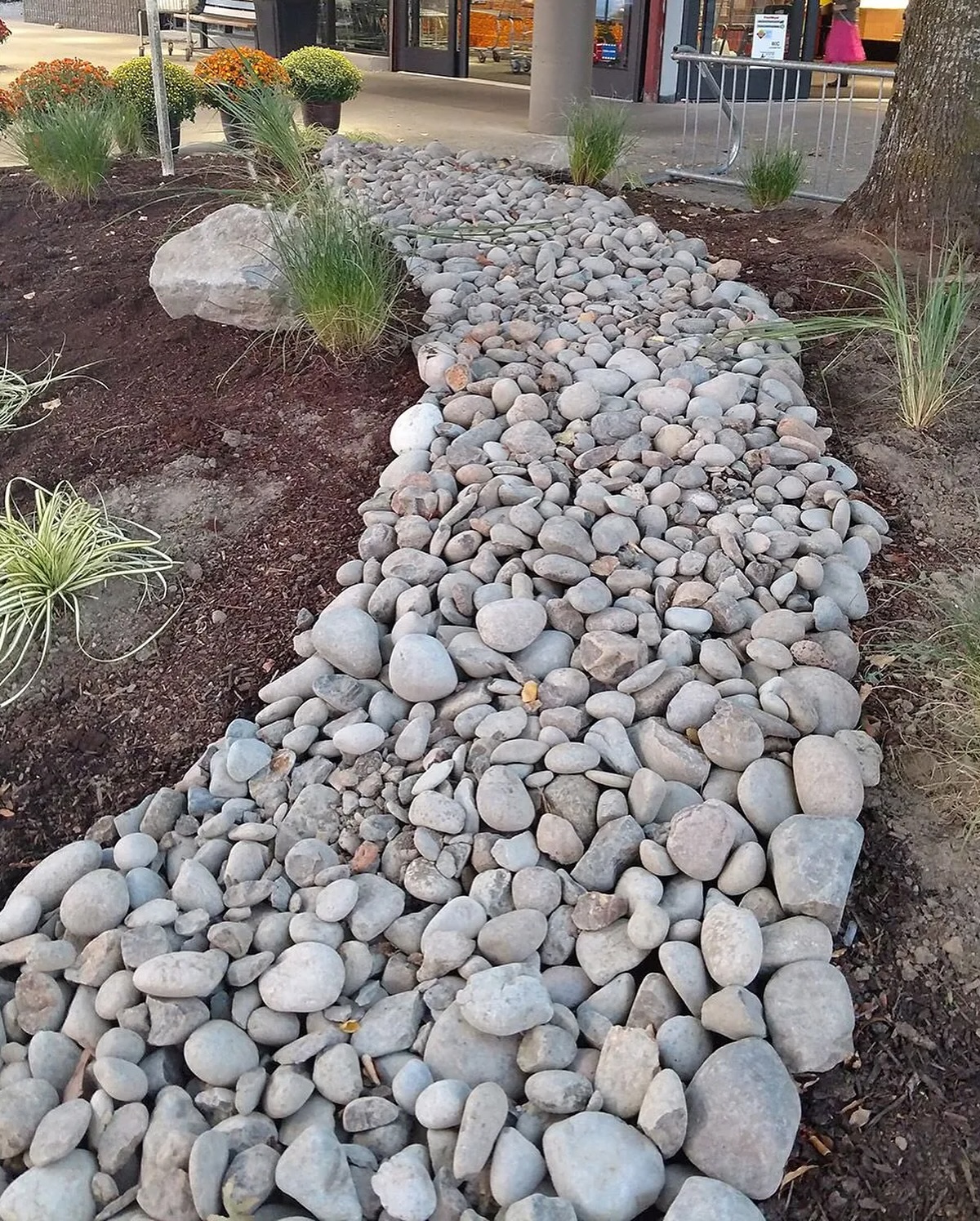
A dry creek bed built from river rock eco landscaping techniques fixed it in one weekend.
The concept is simple. You dig a shallow channel following the natural slope of the land, line it with fabric, and fill it with a mix of larger river stones on the outside and smaller smooth pebbles in the center to guide water flow.
Water now moves through the yard in a controlled, natural-looking channel that honestly resembles a real creek bed when the light hits it a certain way in the afternoon.
This is one of those eco garden design approaches that feels like it belongs in a landscape architecture portfolio but costs almost nothing if you are patient about sourcing stones locally.
How River Rock Eco Landscaping Around My Patio Edge Made the Whole Space Feel Finished
My patio is a simple poured concrete slab. But the edge where the concrete met the lawn always looked unfinished, no matter how neatly I edged the grass.
I placed a 12-inch border of larger river rocks along the entire perimeter of the patio. Some of the stones are palm-sized. Others are smaller, used to fill the gaps.
The effect is surprisingly sophisticated. It reads as intentional in a way that plastic edging never does. And it doubles as a sustainable patio design detail that requires no upkeep beyond occasionally pushing a stone back into place after a hard frost.
The Shaded Corner That Finally Made Sense With River Rock Instead of Struggling Plants
There is a corner of my yard under an old oak tree where nothing grows well. I had tried hostas, ferns, and two different groundcovers.
I stopped fighting the soil conditions and placed a thick layer of river rock across the whole area instead. I left a few small pockets of soil open and planted a single native fern in each pocket where the light was slightly better.
The ferns have never looked healthier because their roots stay cool under the surrounding stones. The rest of the corner now looks like a quiet, intentional natural home aesthetic feature rather than a problem area I was trying to hide.
Shade-tolerant plants and river rock work together in a way that mulch and struggling plants never did for me.
Using River Rock Eco Landscaping to Border My Herb Beds Near the Kitchen Door
My herb garden sits just outside the back door in a small raised area that used to get messy every time it rained. Soil splashed onto the stepping stones. It looked chaotic.
I edged the entire herb bed with a single row of flat river rocks set slightly into the soil, creating a low natural border. Then I filled the space between the border and the stepping stones with fine river pebbles.
This kind of small detail is exactly what eco herb kitchen garden setups often overlook in favor of the plants themselves.
Quick Reference: Choosing the Right River Rock Size
- Small pebbles (1 to 2 inches): Best for narrow beds, borders, and decorative detail work
- Medium stones (2 to 3 inches): Best for pathways and raised bed surrounds where foot traffic occurs
- Large stones (4 inches and up): Best for dry creek beds, patio edging, and natural feature borders
- Flat river stones: Best for low garden borders, stepping stone surrounds, and herb bed edging
- Mixed sizes: Best for dry creek beds where natural variation creates a more realistic look
The One Thing I Got Wrong Before I Got It Right
I skipped the weed barrier in my first river rock bed because I wanted the rocks to look more natural, sitting directly on the soil. Within one season, weeds had pushed through and rooted between the stones.
Removing them meant pulling out rocks and re-laying everything.
Use the barrier. A good recycled fabric option will not compromise the natural look once the rocks are placed on top. The stones cover it completely. You will never see it.
This is the kind of honest advice that DIY eco garden project guides often bury at the bottom. It belongs at the top.
Article Note
River rock eco landscaping rewards patience. Take your time with placement. The difference between a yard that looks designed and one that looks dumped on is usually just fifteen extra minutes of arranging.