
 Gardening Editor
Sophia
Sophia focuses on indoor plants, gardens, and composting with beginner-friendly guidance.
See more from Sophia
•
0 Comments
•
Verified by EcologyMag Team
Gardening Editor
Sophia
Sophia focuses on indoor plants, gardens, and composting with beginner-friendly guidance.
See more from Sophia
•
0 Comments
•
Verified by EcologyMag Team
Written by Sophia. This article may include some images sourced from third-party sites to support content quality. For full details, see our Image Credits page.
The summer I finally stopped cramming mismatched furniture into the corner of my backyard and actually thought about layout, for me, a lot changed. My eco backyard patio layouts had been an afterthought for years, and it showed in every uncomfortable evening I spent out there wishing I was somewhere else.
In this article
- Why Most Backyard Patio Layouts Feel Wrong Even When They Look Right on Paper
- How I Started Thinking About Eco Backyard Patio Layouts Differently
- The Materials I Used and Why They Made the Space Feel Bigger
- Eco Backyard Patio Layouts Work Best When Plants Are Part of the Structure
- What I Got Wrong the First Time and What I Would Do Differently Now
- How the Eco Backyard Patio Layout Changed How I Actually Live Outside
Why Most Backyard Patio Layouts Feel Wrong Even When They Look Right on Paper
I spent years following advice that prioritized aesthetics over how a human body actually wants to sit, move, and rest outdoors. The furniture faced the wrong direction. The path to the back gate cut straight through the seating area like a runway through a living room.
The fix was not about buying better things. It was about understanding how I actually used the space.
I started paying attention to where I naturally walked first thing in the morning when I carried my coffee outside.
How I Started Thinking About Eco Backyard Patio Layouts Differently
Sustainable patio design is not just about materials. It is about designing a space that you will actually use every day, which means it will not be abandoned by next August.
The most wasteful patio is the one nobody sits in.
I began by clearing the whole space. Every chair, every planter, every string of lights came off the patio entirely. Then I watched where the sun went, noticing where the wind came from, feeling where it was actually comfortable to stand.
That process sounds slow. It is. But it saved me from making expensive decisions based on guesses.
The Zone Method That Actually Worked for Me
I divided the patio into three loose zones before placing anything back. One zone for sitting and conversation. One zone for eating. One small zone near the wall for growing things.
Those zones did not need to be equal in size. The eating zone needed to be practical and easy to clean. The sitting zone needed to feel soft, low, and sheltered.
Once I stopped thinking of the patio as one big surface and started thinking of it as three distinct rooms without walls, the layout came together in an afternoon.
The Materials I Used and Why They Made the Space Feel Bigger
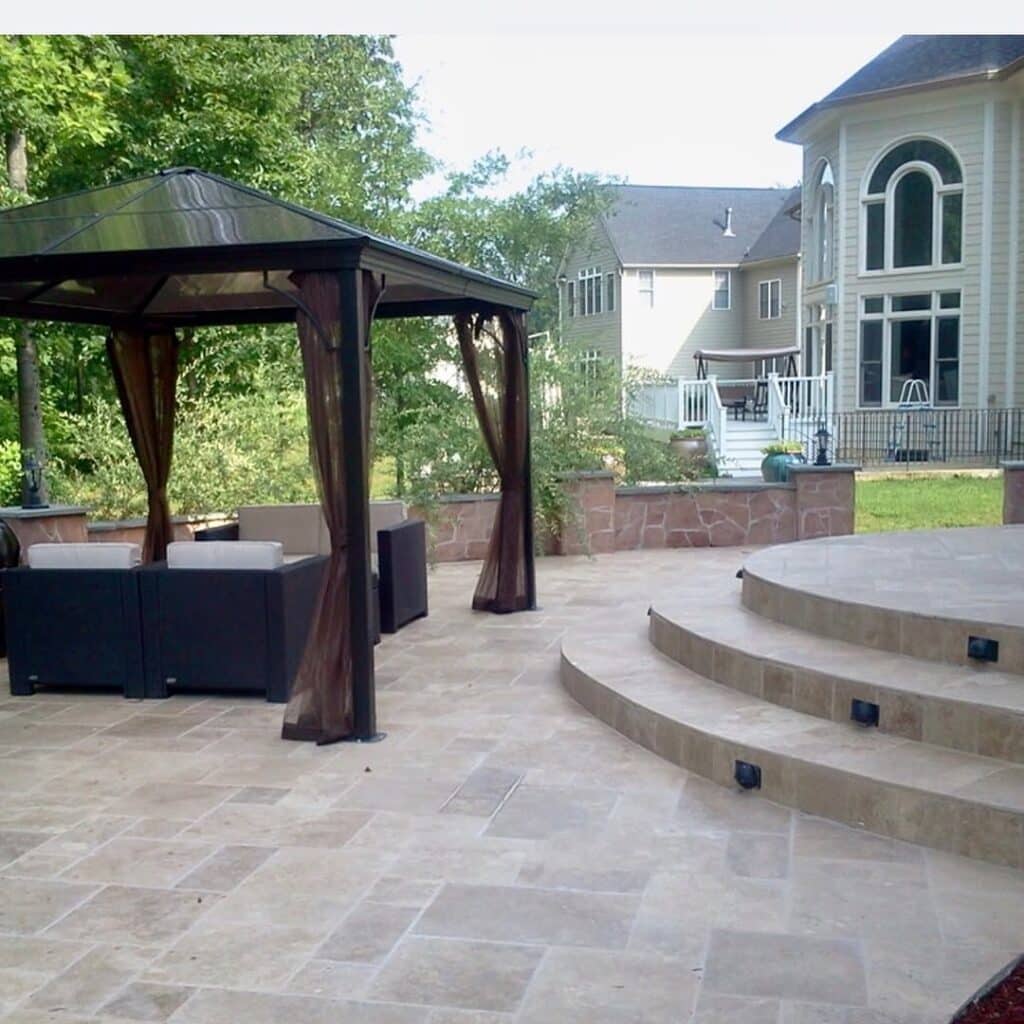
I used a paver patio design with reclaimed clay pavers I sourced from a salvage yard. They were imperfect, different shades of terracotta, and honestly, that irregularity made the space feel warmer.
Running the pavers at a diagonal rather than straight across visually stretched the space by at least a third. That is not a trick. It is genuine geometry.
I kept the furniture close to the ground deliberately. Low seating makes any outdoor space feel larger because it stops the furniture from competing with the sky.
For the growing zone, I built a simple wood pallet planter against the back wall. Painted in a soft, white clay. Planted with herbs and a climbing bean.
Layout Principles I Keep Coming Back To
- Anchor the seating zone to the most sheltered corner first, then build outward
- Run pavers diagonally in small spaces to stretch the visual footprint
- Keep at least one edge of the patio open to a garden view rather than a fence
- Use vertical growing structures to add height without using ground space
- Leave at least 90cm of clear walking width between any two pieces of furniture
Eco Backyard Patio Layouts Work Best When Plants Are Part of the Structure
A row of tall grasses along one edge created a natural screen that made my sitting zone feel enclosed without feeling closed in. The sound those grasses made on a windy evening was extraordinary. A soft, papery rustling that turned the whole space into something private and calm.
I planted shade loving perennials along the northern edge where nothing else had ever grown well. Lady fern, astilbe, and hellebore. They softened the hard line where the pavers met the soil and gave the patio a feeling of being held by the garden rather than dropped into it.
For the eco balcony garden approach I adapted for my ground-level space, I kept every planter within reach of a rainwater collection point. No wasted water. No trailing hoses across the sitting zone.

What I Got Wrong the First Time and What I Would Do Differently Now
I placed the dining table in the sunniest spot because it looked good in that light. It was unusable by midday in July.
Shade first, sunlight second. That is the correct order when you are planning where to eat outside.
I also overplanted the first season. Everything came in enthusiastically, and by late summer, the patio felt like it was being slowly consumed. Leaving deliberate negative space in a garden is not laziness. It is a design decision.
The eco outdoor seating I chose that first year was beautiful, but too bulky if I remember. It swallowed the space. I replaced it the following spring with simpler low benches made from reclaimed timber.
How the Eco Backyard Patio Layout Changed How I Actually Live Outside
Before this redesign, I used the backyard maybe twice a week on warm evenings if everything aligned perfectly.
Now I am outside every morning. Coffee, sometimes a book, usually just the sound of the garden waking up.
The eco backyard patio layouts I was drawn to in the beginning were the ones that looked striking in photographs. What I built ended up looking quieter.
There is a particular quality of light at about seven in the morning when it comes through the back fence at a low angle and catches the edge of the terracotta pavers. I did not plan that.
Article Note
A good patio layout is what you keep noticing. Every season shows you something new about what you got right and what still wants adjusting. That ongoing conversation with the space is, honestly, most of the pleasure.