
 Eco Home Editor
Olivia
Olivia covers eco homes, small spaces, and minimalist interiors with warm and natural sustainable ideas.
See more from Olivia
•
0 Comments
•
Verified by EcologyMag Team
Eco Home Editor
Olivia
Olivia covers eco homes, small spaces, and minimalist interiors with warm and natural sustainable ideas.
See more from Olivia
•
0 Comments
•
Verified by EcologyMag Team
Written by Olivia. This article may include some images sourced from third-party sites to support content quality. For full details, see our Image Credits page.
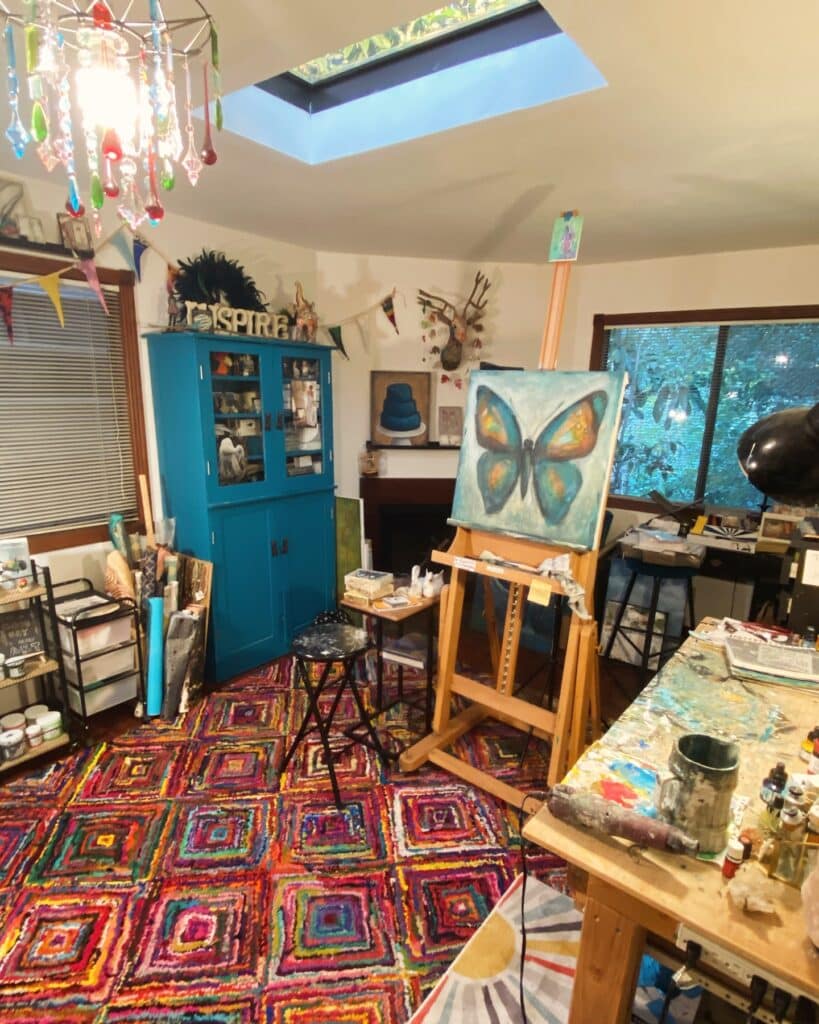
I repainted my studio walls with a clay-based paint, and by the time the light shifted to afternoon gold, the room felt like somewhere I had always been meant to work. That was the moment I understood that those eco art studio room ideas aren’t just about being responsible. They’re about building a space that actually feels good to be inside for hours at a stretch.
In this article
- How I Started Thinking About My Studio as a Living Space, Not Just a Workspace
- The Natural Material Choices That Made My Studio Feel Completely Different
- How I Organised My Supplies Without Buying a Single Piece of New Plastic Storage
- The Lighting Decisions I Made That Changed How Many Hours I Could Comfortably Work
- How I Used Plants to Make the Room Feel Alive Without Overwhelming the Space
- The Wall Decisions That Make the Room Feel Like Mine and Not a Rental Space
- The Honest Truth About What Makes Eco Art Studio Room Ideas Actually Work Long Term
How I Started Thinking About My Studio as a Living Space, Not Just a Workspace
Most people design an art studio the way they’d set up a garage. A place where mess is allowed, and aesthetics don’t really matter.
I used to think the same way. But the longer I spent in a cold, cluttered space surrounded by plastic storage bins and fluorescent lighting, the less I actually wanted to create.
So I stripped it back. I started treating the room the way I’d treat any room in my home that I genuinely loved spending time in. And that shift changed everything about how I approach the eco art studio room.
The first rule I gave myself was simple. Every material I brought into the room had to either come from nature, be secondhand, or be something I genuinely couldn’t find a better alternative for.
That constraint turned out to be the most creative decision I’ve ever made in a space.
The Natural Material Choices That Made My Studio Feel Completely Different
Raw wood is the single best thing you can put in an art studio. Not polished.
I sourced a long slab of reclaimed pine from a salvage yard and had it cut to fit my wall as a floating shelf. It cost less than a third of what a new shelf from a home store would have cost.
For my work surface, I use a solid oak door laid across two sawhorses. It’s stable, generous in size, and the surface has a texture that grips paper beautifully when I’m sketching.
Upcycled furniture like this is underrated in creative spaces. Most artists I know who try it never go back to buying new.
The floor was covered with a natural jute rug in the main work zone. It’s easy to shake out, doesn’t trap paint fumes the way synthetic rugs can, and the texture beneath your feet when you’re standing at an easel for two hours matters more than you’d think.
Small Details That Add Up Faster Than You Expect
Linen curtains instead of synthetic blinds. Beeswax candles on the windowsill that I light on slower days.
None of these is a dramatic change. But together they create an atmosphere that feels warm and intentional rather than assembled from a supply catalogue.
How I Organised My Supplies Without Buying a Single Piece of New Plastic Storage
This is where most eco art studio room articles lose people. Because the assumption is that an organisation requires buying things.
It doesn’t, believe me.
I spent about two weeks collecting glass jars of different sizes from my kitchen, asking friends to save their pasta sauce jars, and picking up interesting ceramic pots from charity shops.
For larger supply storage, I use open wooden crates stacked against one wall. The kind originally used for fruit and vegetables. They look beautiful when filled with rolled paper.
Sustainable small space organisation really comes down to one principle. Use what already exists before you buy something new.
Simple Eco Studio Organization Swap List
- Replace plastic drawer dividers with folded cardboard sections
- Replace synthetic storage bins with woven seagrass baskets
- Replace plastic jars with glass pasta sauce or jam jars
- Replace plastic label holders with small hand-written paper cards
- Replace foam padding with folded natural linen scraps
The Lighting Decisions I Made That Changed How Many Hours I Could Comfortably Work
Bad lighting in a studio is a creativity killer. And most studio lighting advice misses the most important point entirely.
I positioned my easel about 1.2 metres from the north-facing window. North light is consistent and cool. It doesn’t shift dramatically through the day the way south or west light does, which matters when you’re mixing colours.
For evenings and darker days, I use warm LED bulbs in simple ceramic lamp holders rather than harsh overhead fluorescents. Warm light makes you want to stay. Cool clinical light makes you want to finish and leave.
Eco home studio space design should always prioritise the human body first. How your eyes feel after three hours, how your back feels and so on.
How I Used Plants to Make the Room Feel Alive Without Overwhelming the Space
An art studio without plants feels like a room waiting to be used. That’s my honest opinion.
But the key is choosing plants that thrive in the conditions your studio offers rather than fighting to keep something alive that was never suited to the space.
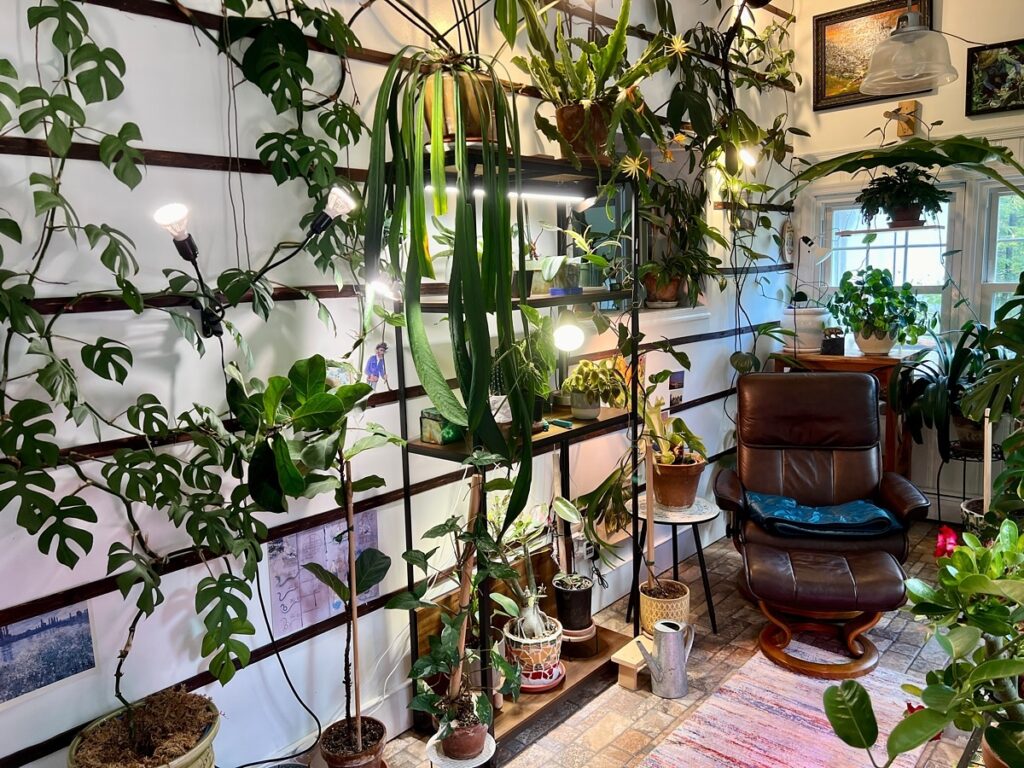
My studio gets good morning light and drops to fairly low light by early afternoon. So I chose plants that love that pattern. A large pothos on the high shelf that trails down toward the window.
Indoor plant decor in a studio also serves a practical function. Certain plants help filter the air, which matters when you’re working with paints.
I keep a small herb garden, kitchen setup-style pot of lavender near my desk purely for the scent.
The Wall Decisions That Make the Room Feel Like Mine and Not a Rental Space
White walls in a studio are a default; I made that mistake for three years before I finally changed it.
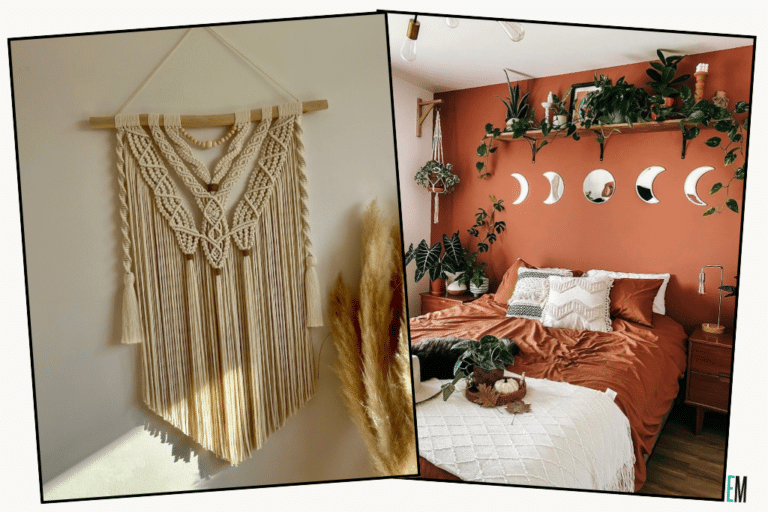
I painted two walls in a warm terracotta clay paint and left the other two white. The effect is grounding. The room feels anchored. And the terracotta colour doesn’t compete with work pinned on the white walls, but it gives the space a warmth that plain white simply cannot.
Eco wall styling also means thinking about what you hang and how. I don’t use nails where I can avoid them. Instead, I use strips of beeswax or removable paper-based adhesive strips for lighter pieces, and a single long wooden dowel hung with natural twine from two hooks for rotating larger work.
The dowel changes constantly. New work goes up, old work comes down. It keeps the room feeling current without ever feeling like a gallery that’s too precious to actually work in.
What I Put on the Walls Beyond My Own Work
Dried botanical prints I made myself using pressed garden flowers and scanner paper. A piece of driftwood I found on a beach trip that I oiled and hung flat. A small collection of vintage botanical illustrations from a charity shop, all in mismatched secondhand frames that I sanded back to raw wood.
The Honest Truth About What Makes Eco Art Studio Room Ideas Actually Work Long Term
The spaces that feel best to work in long term are not the ones that look the most finished in a photograph.
Every eco art studio room idea I’ve tried and kept has one thing in common. It uses natural or secondhand materials that age beautifully rather than looking worn and sad.
A plastic bin that gets scratched looks tired. A wooden crate that gets scratched looks used and loved.
That difference in how materials age is not a minor aesthetic point. It’s the reason a well-designed eco art studio room still feels inspiring five years later, when a cheap synthetic one starts to feel depressing after eighteen months.
Sustainable interior design in a creative space is really just designing for longevity
Article Note
The room you make art in shapes the art you make. That’s not a romantic idea. It’s something you’ll feel immediately the first morning you sit down in that space.