
 Eco Home Editor
Olivia
Olivia covers eco homes, small spaces, and minimalist interiors with warm and natural sustainable ideas.
See more from Olivia
•
0 Comments
•
Verified by EcologyMag Team
Eco Home Editor
Olivia
Olivia covers eco homes, small spaces, and minimalist interiors with warm and natural sustainable ideas.
See more from Olivia
•
0 Comments
•
Verified by EcologyMag Team
Written by Olivia. This article may include some images sourced from third-party sites to support content quality. For full details, see our Image Credits page.
The first morning I spent at our lake house after we finished the interior, I sat with a cup of coffee and could not tell where the outside ended, and the inside began. That is exactly what a good eco lake house interior should do.
In this article
- The Eco Lake House Interior Idea That Changed Everything for Me Was Keeping the Palette Rooted in What I Could See Outside the Window
- I Let the Wood Stay Raw and I Have Never Regretted It Once
- I Swapped Every Synthetic Textile in the House for Natural Fibres, and the Rooms Felt Warmer Immediately
- The Kitchen Was Where Sustainable Thinking Had to Become Practical, Not Just Pretty
- I Brought the Outside In With Plants, but Not in the Way Most People Think
- I Designed the Bathroom Around Calm, and It Became My Favourite Room in the House
- The Eco Lake House Interior Idea I Come Back to Most Is Letting Imperfection Stay Visible
The Eco Lake House Interior Idea That Changed Everything for Me Was Keeping the Palette Rooted in What I Could See Outside the Window
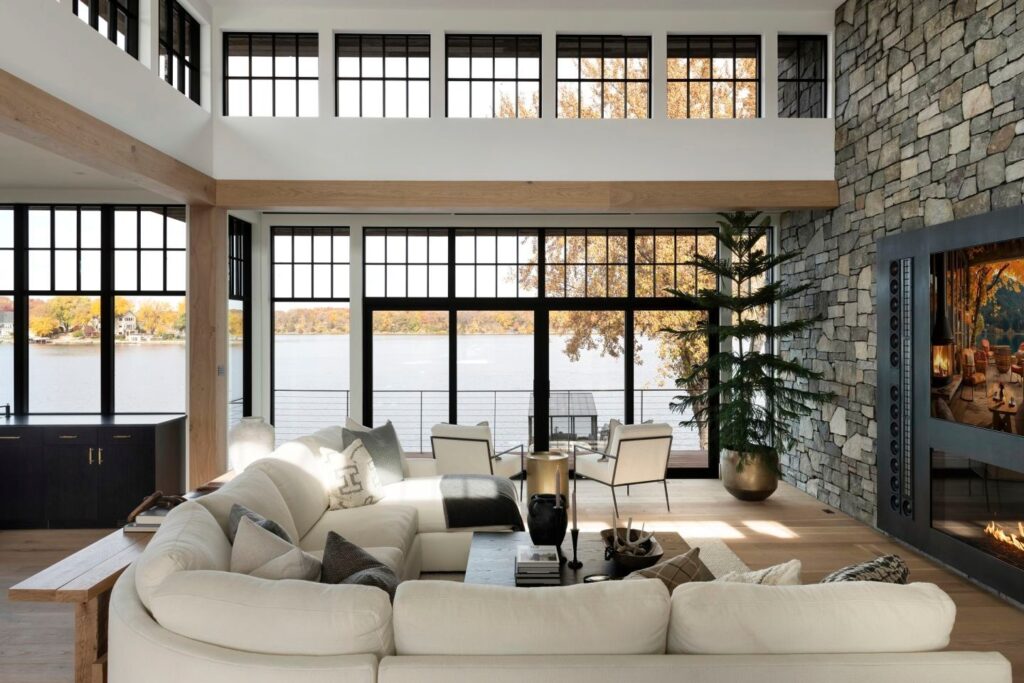
When I first started thinking about color for the lake house, I made the mistake of bringing in too many contrasting tones.
What worked was pulling the palette directly from the view outside.
Soft clay, faded sage, birch white, and the particular grey-brown of wet stones near the water’s edge. These became the foundation of every room.
The natural home color palette concept sounds simple until you actually try it. You have to be disciplined. No accent walls in trendy greens that don’t match the actual green of the pines.
When the interior echoes the exterior, the rooms breathe differently.
I Let the Wood Stay Raw and I Have Never Regretted It Once
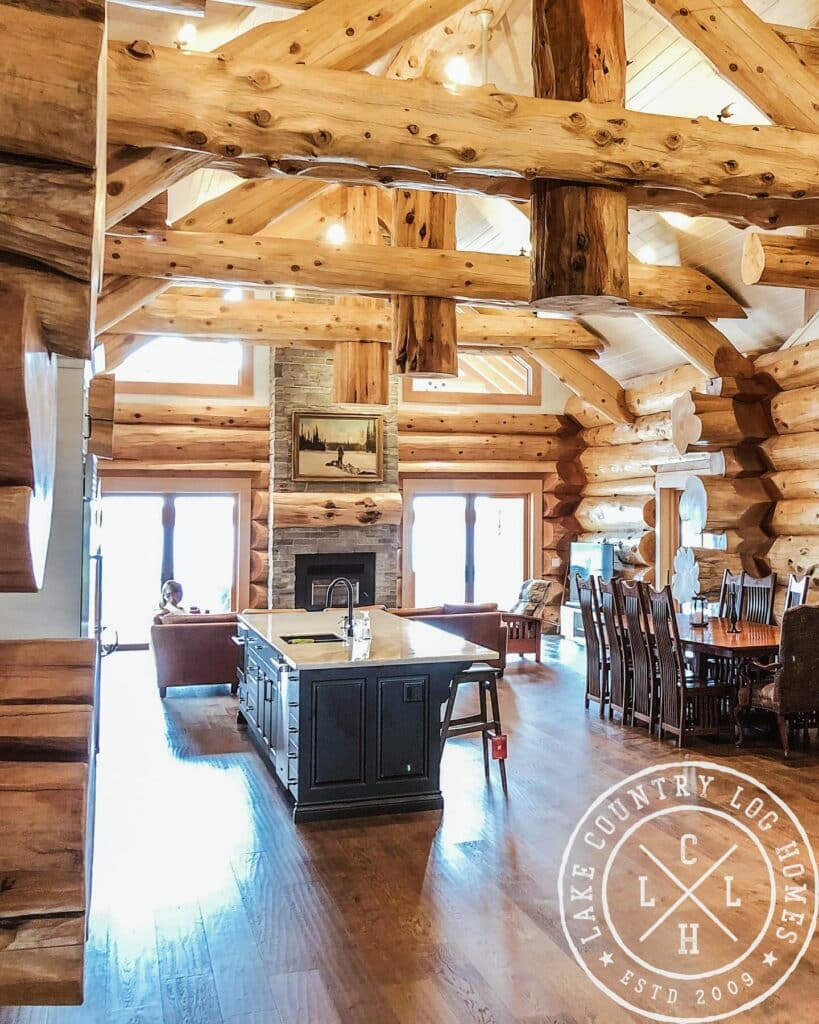
Most renovation guides will tell you to seal and stain every wood surface.
We left the ceiling beams unfinished. We sanded the old pine floors lightly but kept their knots and imperfections visible. We sourced a dining table from a local sawmill and left the top raw with only a thin coat of natural oil.
Upcycled furniture became central to this approach. Old barn doors became sliding panels. A stack of salvaged railway sleepers became a floating shelving unit in the main room.
The wood darkens naturally near the windows where the light hits it every afternoon. It smells faintly of the forest still.
I Swapped Every Synthetic Textile in the House for Natural Fibres, and the Rooms Felt Warmer Immediately
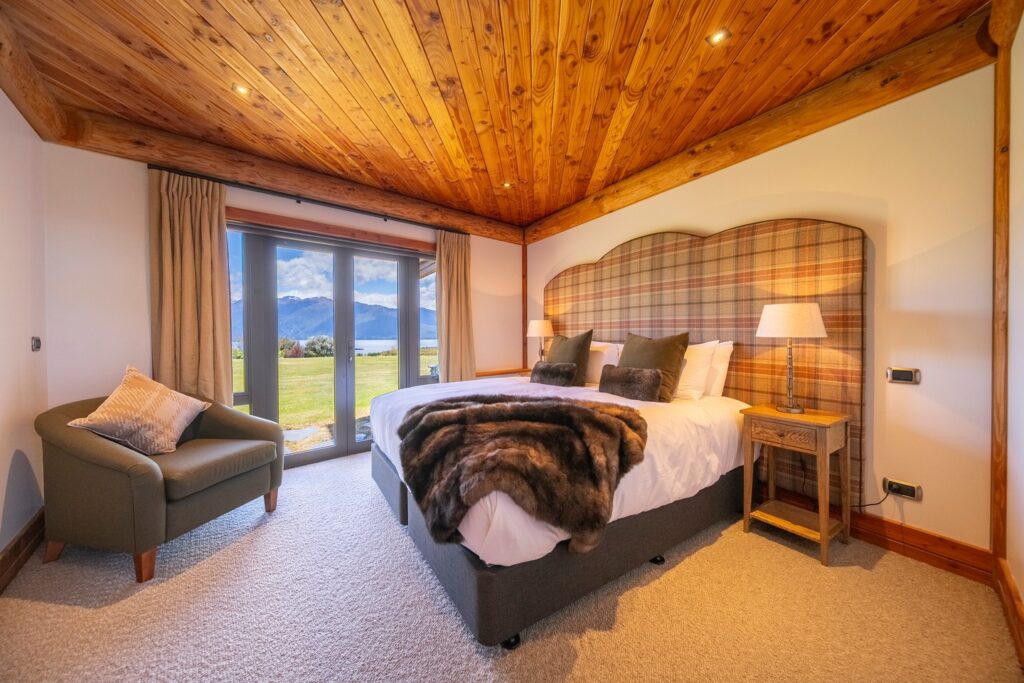
Polyester cushions, synthetic rugs, acrylic throws. They all had to go.
Linen curtains that pool slightly on the floor. A jute rug that feels rough under bare feet in a way that reminds you you’re somewhere real. Wool blankets were folded over the arm of the sofa.
The change was immediate.
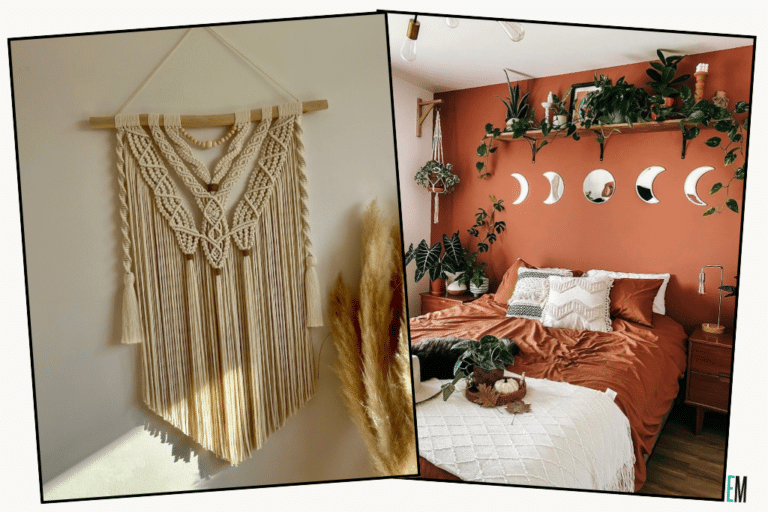
For the eco bedroom decor specifically, I focused on undyed or naturally dyed textiles. A linen duvet cover in an unbleached cream. Pillowcases in washed grey linen that get softer every time you wash them.
Nothing in this house feels like it came from a big-box homeware store. That matters more than I expected it to.
The Kitchen Was Where Sustainable Thinking Had to Become Practical, Not Just Pretty
Lake house kitchens can become cluttered fast, especially if you’re coming and going with different groups of people through different seasons.
I removed the upper cabinet doors entirely and replaced the shelving with reclaimed timber. Glass jars replaced plastic containers for everything in the pantry. A small herb garden kitchen setup went in on the deep windowsill above the sink, which gets south-facing light from around nine in the morning.
Less weight on the shelves means you actually see what you have. And you stop buying duplicates.
I Brought the Outside In With Plants, but Not in the Way Most People Think
The instinct is to buy dramatic tropical plants because they photograph beautifully. I tried that.
What worked was sourcing plants that actually belong to the regional landscape. Native ferns. Mosses growing in shallow trays of pebbles.
I also placed a narrow shelf just inside the back door for a rotating collection of found objects.
I Designed the Bathroom Around Calm, and It Became My Favourite Room in the House
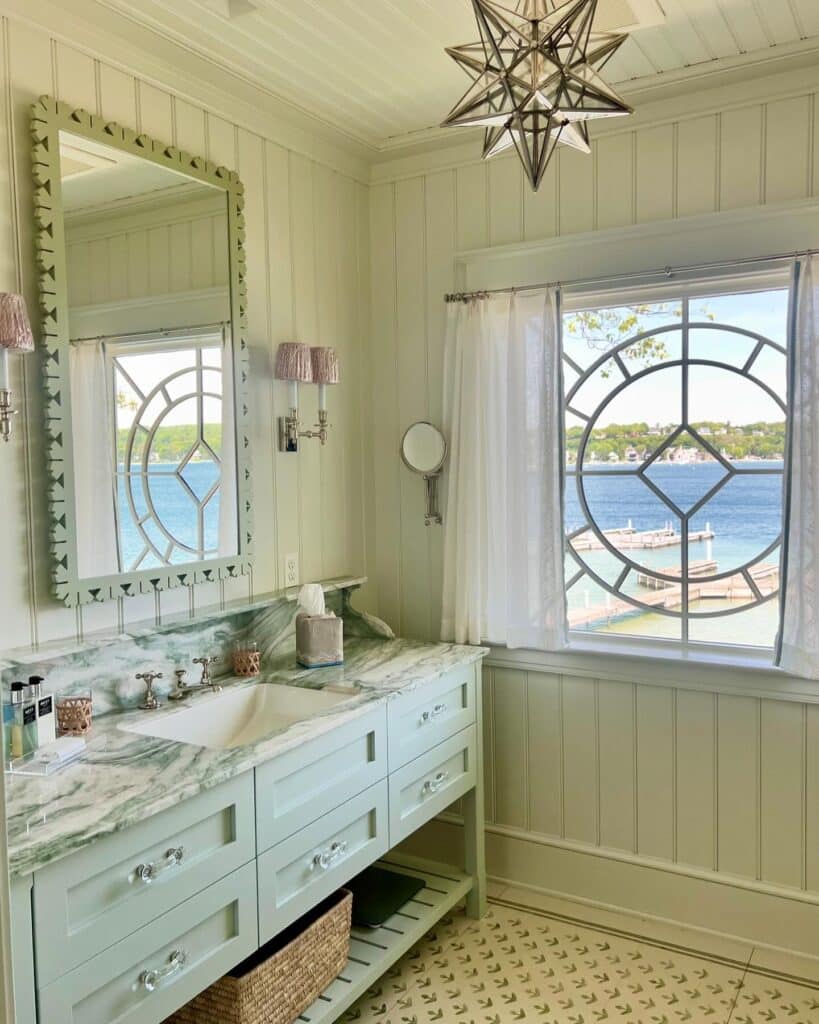
The bathroom was the last room we tackled, and I poured the most thought into it.
Stone tile on the floor. A wooden bath mat that dries quickly and smells faintly of cedar. Open shelving with glass bottles for shampoo and conditioner. A small, low-maintenance plant, a pothos, sits on the deep windowsill where it catches the morning light.
Eco bathroom storage came down to a simple principle: if it’s in a plastic bottle, it doesn’t belong in this room. Everything lives in glass, wood, or ceramic.
The natural bathroom decor approach here is about removing noise. No wall art competing for attention. Just texture.
The Eco Lake House Interior Idea I Come Back to Most Is Letting Imperfection Stay Visible
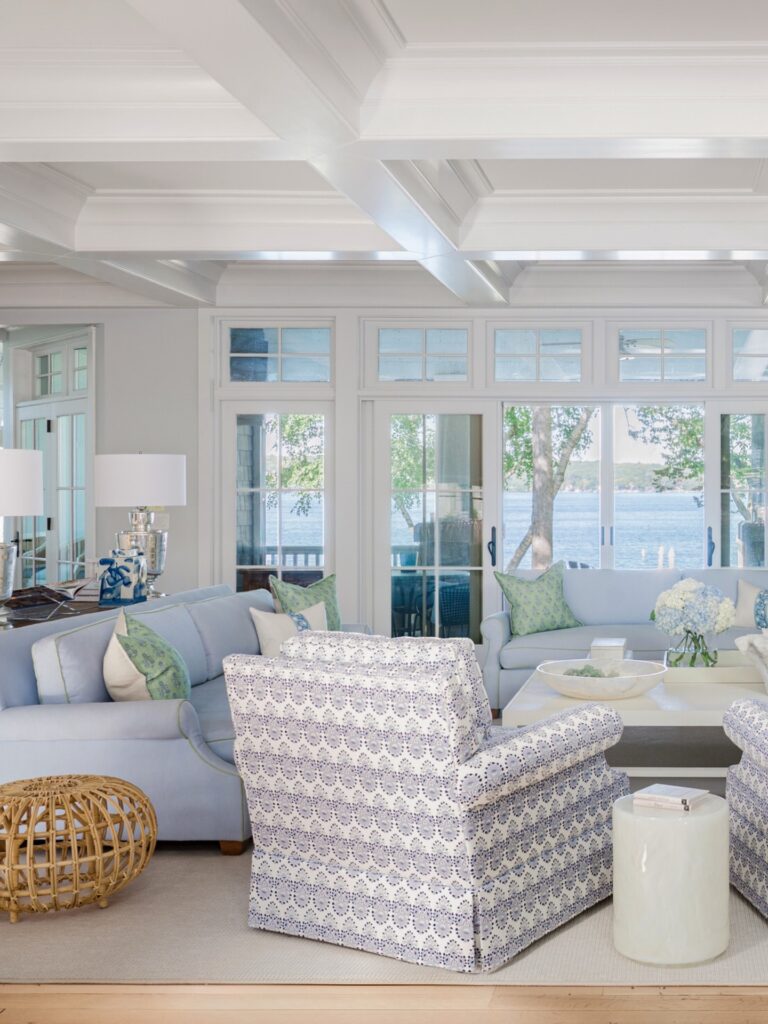
There’s a crack in the plaster above the fireplace. We left it.
The sustainable interior design philosophy that resonates most with me now is the one that doesn’t try to hide the age or the wear of a space. A lake house should look like it has lived through summers. Like, people have actually been happy inside it.
Minimalist eco home living at its best is for choosing things that matter and letting the rest fade out.
When the interior reflects real life honestly, the house feels generous in a way that polished, styled interiors rarely do.
Things Worth Keeping in Mind Before You Start
- Source reclaimed wood locally if you can. Shipping heavy timber long distances cancels out much of the eco benefit.
- Natural textiles do require more care. Linen wrinkles. Wool needs proper storage between seasons. That’s part of the deal.
- Not every room needs a plant. Place them where light actually supports them, not where they look good on camera.
- If you’re working with a tight budget, start with textiles and lighting. These have the biggest impact per dollar spent.
- The best eco lake house interior ideas are the ones you can sustain and maintain without constant effort. Design for the life you actually live there, not the one you imagine.
Article Note
There’s a particular quality of light that comes through linen curtains in the early morning at a lake house. That light is the reason all of this matters. When the interior is good and grounded, it doesn’t compete with that light. It holds it.