
 Eco Home Editor
Olivia
Olivia covers eco homes, small spaces, and minimalist interiors with warm and natural sustainable ideas.
See more from Olivia
•
0 Comments
•
Verified by EcologyMag Team
Eco Home Editor
Olivia
Olivia covers eco homes, small spaces, and minimalist interiors with warm and natural sustainable ideas.
See more from Olivia
•
0 Comments
•
Verified by EcologyMag Team
Written by Olivia. This article may include some images sourced from third-party sites to support content quality. For full details, see our Image Credits page.
I just woke up in a properly designed eco cabin and thought, this is what a room is supposed to feel like. no synthetic smells, just pale wood and green light coming through linen curtains. That feeling is exactly what modern eco cabin interiors are chasing me right now.
In this article
- The First Modern Eco Cabin Interior Idea That Changed Everything for Me Was the Light
- I Stopped Buying New Wood and Started Looking at What Already Existed Around Me
- The Floor Was Where I Made the Most Impactful Eco Decision Without Realising It at the Time
- I Learned That Plants Are Not Optional in an Eco Cabin Interior They Are Structural
- The Color Palette I Chose Was Almost Embarrassingly Simple, and That Was Exactly Right
- I Built My Eco Cabin Kitchen Around One Simple Rule That Most People Skip
- The Detail That Made My Eco Cabin Feel Complete Was the Smallest and Cheapest One
The First Modern Eco Cabin Interior Idea That Changed Everything for Me Was the Light
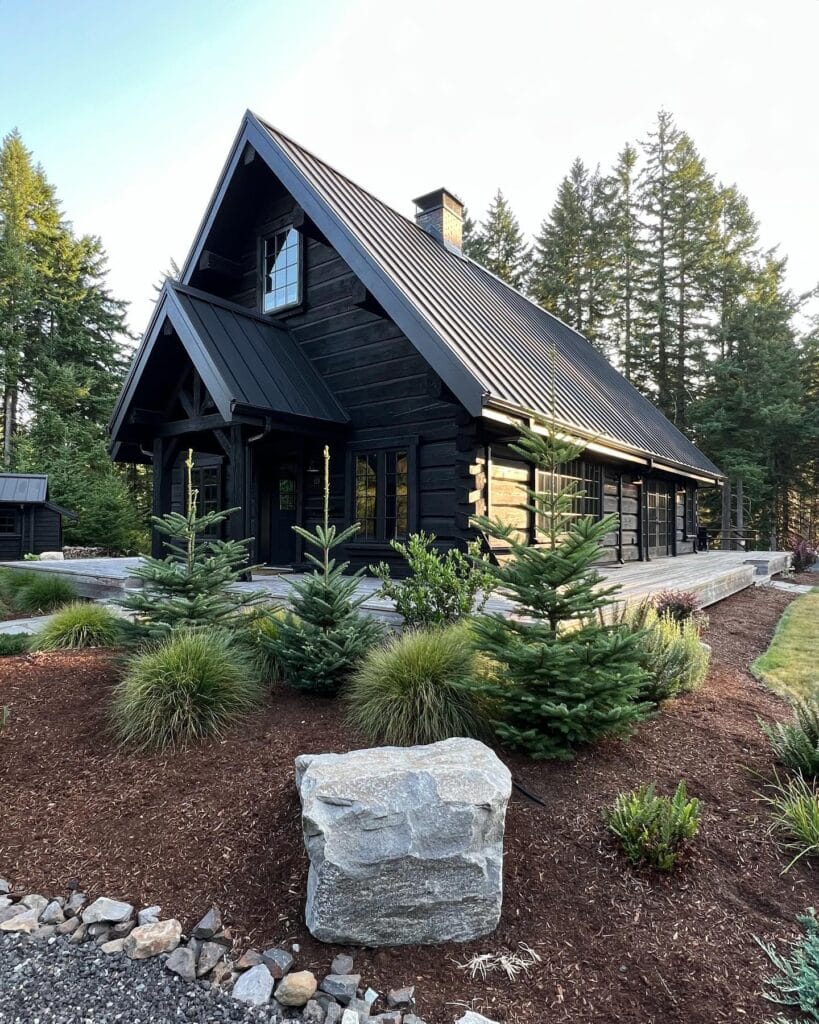
Natural light is not just a design choice in a cabin. It’s the whole mood.
I used to hang heavy curtains because I thought it looked cozy. What it actually did was make every room feel slightly sad by 3 pm in winter.
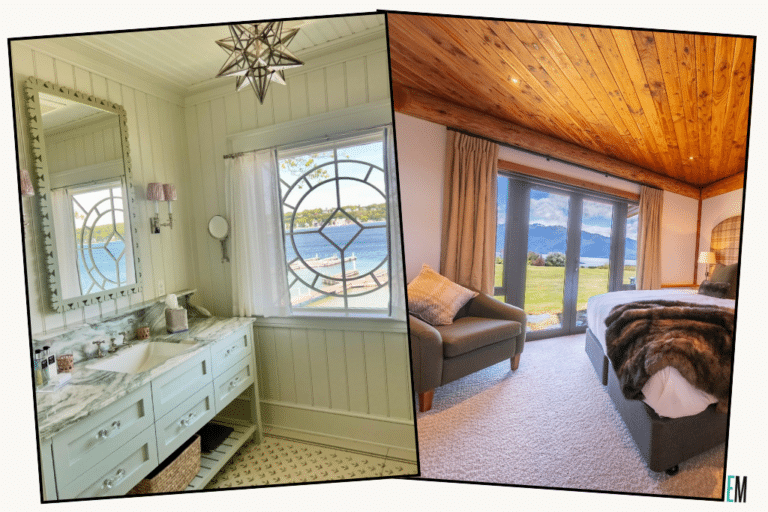
Swapping to unbleached linen panels that can be pulled fully open changed the feeling of my space more than any piece of furniture ever did. The light comes in soft and golden in the morning.
Placing a raw-edge wooden shelf or a simple bench directly in a window zone pulls the eye outward toward the garden or the trees. It connects inside to outside, which is the whole point of a modern eco cabin interior if done right.
I Stopped Buying New Wood and Started Looking at What Already Existed Around Me
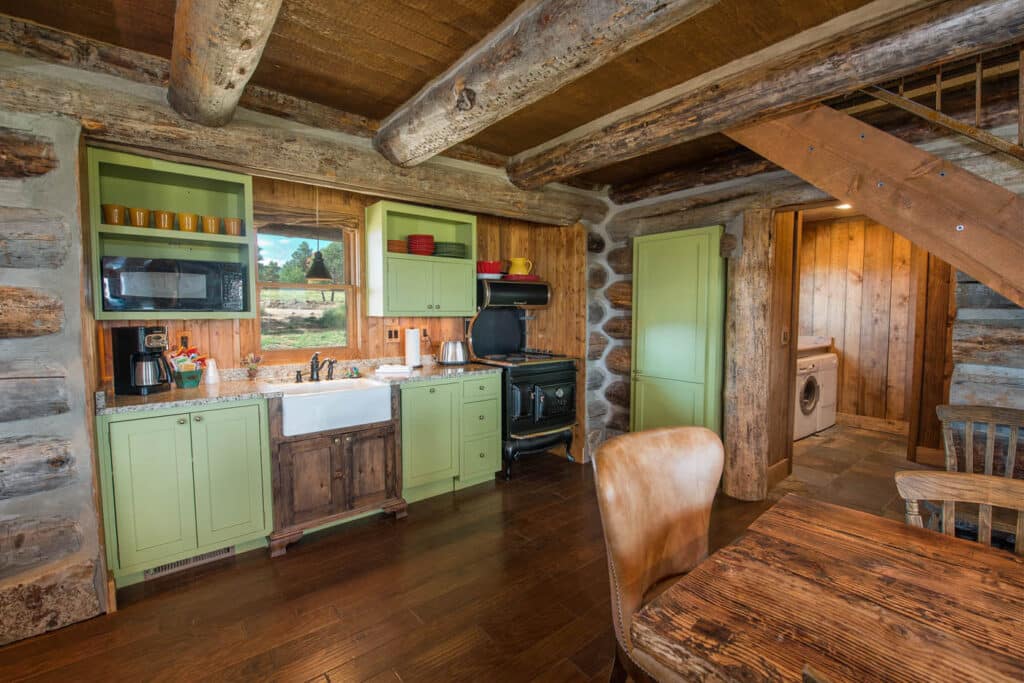
Reclaimed timber is something people talk about a lot in sustainable design, but the reality of living with it is even better than the theory.
I found old floorboards at a salvage yard about thirty minutes from my house. They cost almost nothing. They were already dried, already aged, already beautiful in the way new wood simply cannot be.
I used them as wall cladding in one corner of my main room. That single decision made the entire space feel like it had a history worth staying in.
This connects directly to upcycled furniture thinking. Before you buy anything new, ask what already exists that has the grain, the weight, and the wear you’re actually looking for.
If you’re working with sustainable small space organization principles, reclaimed wood shelving is also one of the most practical surfaces you can add. It takes hooks, it takes plants, it takes candles.
The Floor Was Where I Made the Most Impactful Eco Decision Without Realising It at the Time
It’s warm underfoot in a way that ceramic tile never is. It’s naturally antimicrobial. It comes from bark that is harvested without cutting down the tree, and it grows back. The environmental credentials are good.
In a cabin setting, it also absorbs sound beautifully. Mornings feel quieter. Footsteps don’t echo. The whole room has a softness to it that you don’t notice until you go back to a tiled space and realize what you’d been missing.
Pairing cork with a natural fiber rug in jute or wool gives you layers of warmth that feel very much in line with Japandi eco interior design principles. Calm, natural, nothing performative.
I Learned That Plants Are Not Optional in an Eco Cabin Interior They Are Structural
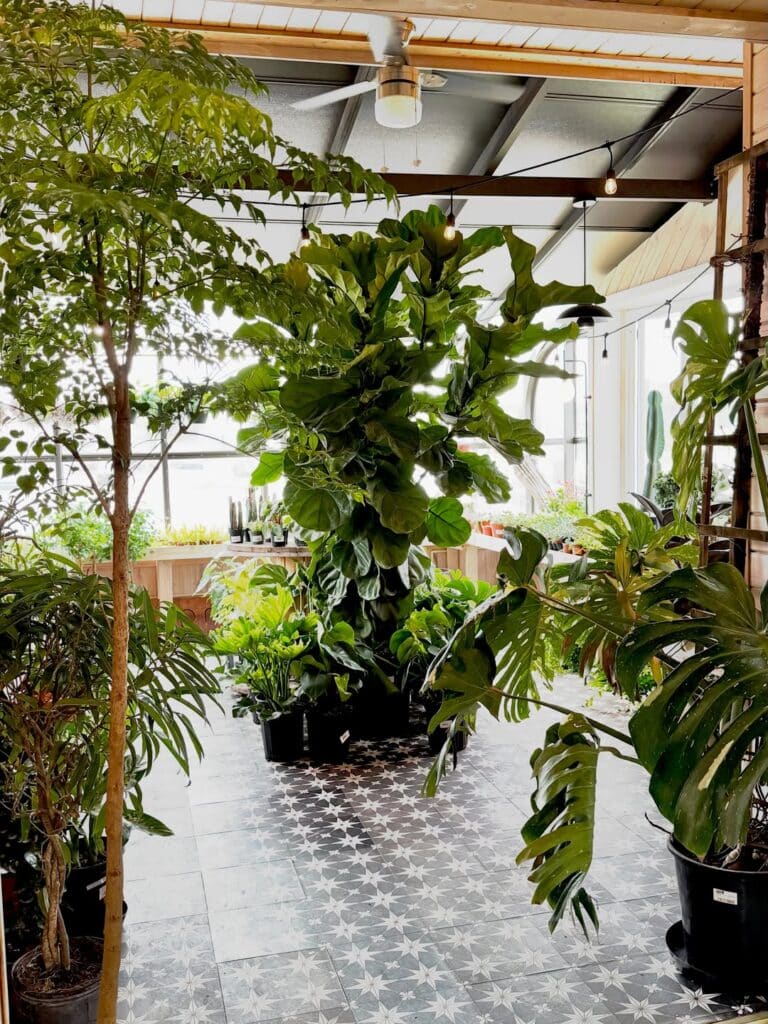
There is a difference between a room that has plants and a room that is designed around them.
In my experience, indoor plant decor only works in a cabin space when the plants are allowed to actually grow.
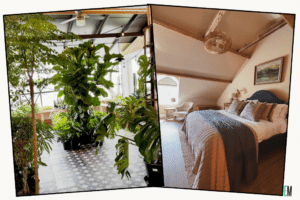
I keep a trailing pothos along the top of my kitchen shelves. It has grown across almost the entire run of cabinets now. It costs nothing to maintain, it cleans the air, and every single person who walks into that kitchen notices it before they notice anything else.
For anyone working with small eco tiny home living, trailing plants are your best friend because they move in three dimensions. They don’t take up floor space.
The Color Palette I Chose Was Almost Embarrassingly Simple, and That Was Exactly Right
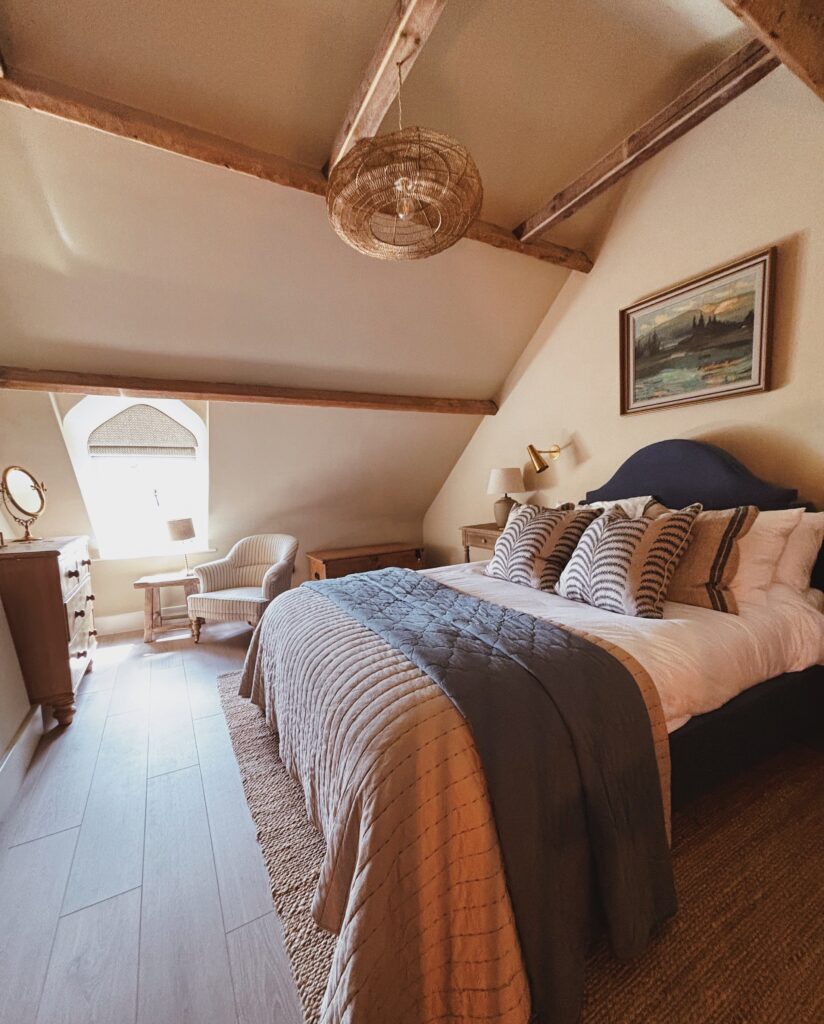
That is the full palette of my main living space. When I first mapped it out, I thought it would feel boring. It doesn’t.
A natural home color palette in a cabin works because the wood, the plants, and the light do all the work that a colored wall would normally be doing.
The mistake I see most often in eco-minded cabin spaces is bringing in too many competing natural textures in too many different tones. A linen cushion, a jute rug, a rattan chair, a wood shelf, and a wicker basket can start to look like a mood board rather than a home if the colors across those pieces are all slightly different temperatures.
Pick warm or cool and stay consistent.
I Built My Eco Cabin Kitchen Around One Simple Rule That Most People Skip
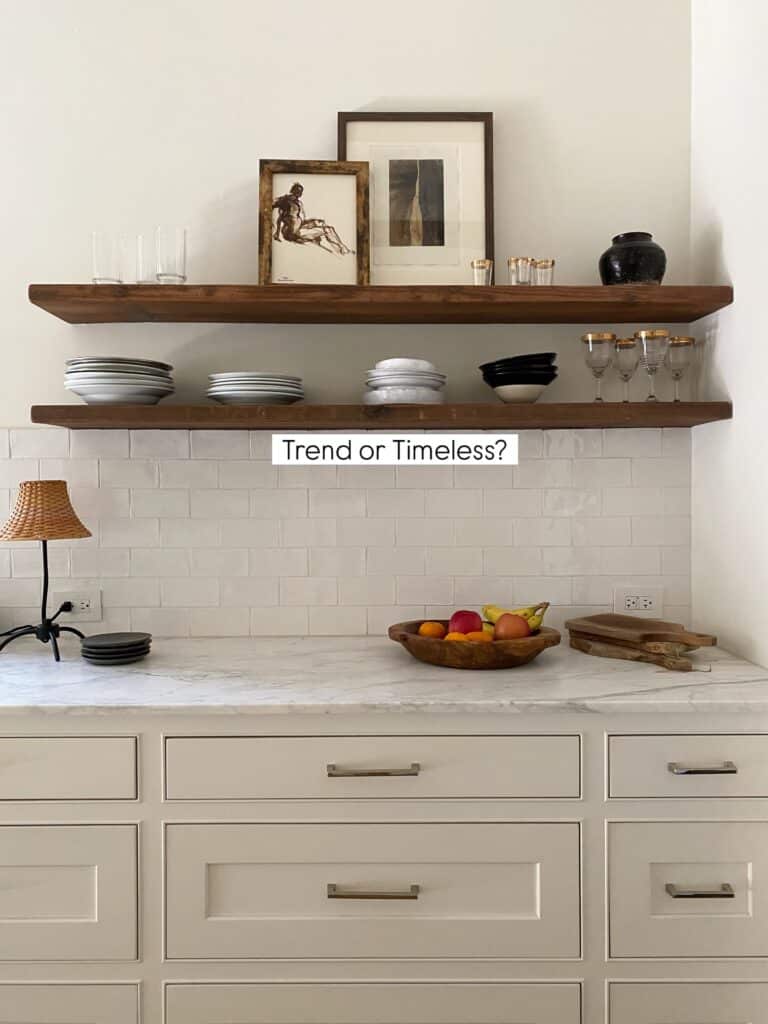
Only keep what you actually use where you can see it.
That sounds obvious. It isn’t.
Open shelving in a cabin kitchen looks stunning when it’s curated and lived in. It looks chaotic when it becomes a storage solution for everything that doesn’t have another home.
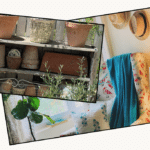
My kitchen shelves hold wooden cutting boards, glass jars filled with dried goods, a few cast-iron pieces, and a small herb garden kitchen setup on the sill above the sink.
This approach also connects directly to the Eco Pantry organization. When you can see your food, you waste less of it. You cook more creatively.
The kitchen is where modern eco cabin interior ideas and genuine sustainable living actually overlap.
The Detail That Made My Eco Cabin Feel Complete Was the Smallest and Cheapest One
I know that sounds minor. But the quality of light in the evening is entirely different when it comes from beeswax rather than paraffin. The flame is warmer, and the faint honey scent is nothing like the synthetic fragrances that most candles carry.
In a space built around modern eco cabin interior, the evening atmosphere matters just as much as the daytime one.
A beeswax candle on a raw wood sill, a wool blanket on the arm of a chair, and a window cracked just enough to hear whatever is outside.
The cozy natural bedroom design version of this is simply a candle on the bedside table instead of a lamp after 9 pm.
Article Tips
If you’re just starting to apply modern eco cabin interior ideas to your space, begin with the light and the floor before touching anything else. These two elements set the emotional temperature of every room. Reclaimed wood and natural fiber textiles can be sourced secondhand in most areas for very little cost. Cork flooring is widely available through sustainable suppliers and installs more easily than most people expect. And remember that in a cabin interior, restraint is always the right instinct. One beautiful, honest material will always outperform four competing ones.
There’s something that happens when a room finally feels right. My cabin space reached that point slowly, piece by piece, material by material. It didn’t happen from a shopping list. It happened from paying attention to what each room was actually asking for.