
 Green Living Editor
Maria
Marie writes about low-waste habits and practical sustainability for everyday life.
See more from Maria
•
0 Comments
•
Verified by EcologyMag Team
Green Living Editor
Maria
Marie writes about low-waste habits and practical sustainability for everyday life.
See more from Maria
•
0 Comments
•
Verified by EcologyMag Team
Written by Maria. This article may include some images sourced from third-party sites to support content quality. For full details, see our Image Credits page.
I was standing in my hallway last autumn with three IKEA KALLAX shelves, a hot glue gun, and a very specific kind of exhaustion that comes from owning too much stuff and still feeling like nothing has a home. That was the day I properly committed to sustainable IKEA hacks for home organisation.
And honestly, it changed everything about how my flat feels.
In this article
- Why I Stopped Buying New Storage and Started Rethinking What I Already Had
- The Sustainable IKEA Hacks for Home Organisation I Use Most in My Kitchen
- How I Turned My KALLAX Into a Genuinely Eco Piece of Furniture
- The Bedroom and Closet Hacks That Genuinely Reduced the Clutter I Had Been Living With for Years
- The Sustainable IKEA Hacks for Home Organisation I Wish I Had Started With
Why I Stopped Buying New Storage and Started Rethinking What I Already Had
I had three RÅSKOG trolleys, two KALLAX units, and a pile of SKÅDIS pegboards I’d bought with good intentions and then ignored. Instead of buying anything new, I spent one weekend figuring out how to make them work together.
The SKÅDIS went above my desk. The RÅSKOG moved into the bathroom for eco bathroom storage. The KALLAX, lined with old linen cloth I’d cut from a worn tablecloth, became my main hallway unit with proper zones for keys, bags, and reusable totes.
Not one new purchase. Real, lasting organisation.
This is what a sustainable home organisation actually looks like in practice. It’s unglamorous at first. But it holds.
The Sustainable IKEA Hacks for Home Organisation I Use Most in My Kitchen
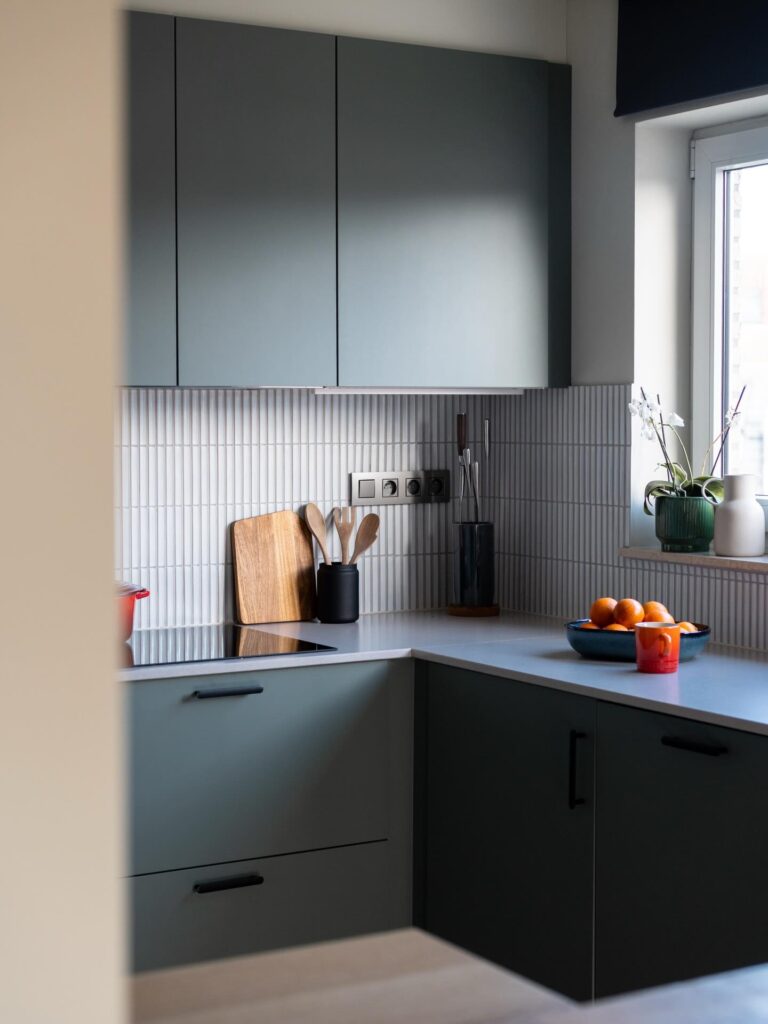
The kitchen was my biggest problem area. Small counter space, limited cabinet depth, and a genuine obsession with dried herbs and bulk grains that had no logical home.
I installed an IKEA GRUNDTAL rail along the back of my counter. From it I hang everything: a small wire basket for garlic and shallots, glass jars for loose-leaf tea, a little pot for my herb garden kitchen setup that I keep going year-round with basil and thyme.
For the pantry, I used IKEA KASSETT magazine boxes cut open and lined with brown paper to create stackable dividers inside deep cabinets. It’s not a hack you’ll see on many design accounts. But for the eco pantry organisation, it works better than any plastic insert I’ve tried.
I also reused IKEA FLISAT children’s storage as a fruit and vegetable rack near the window. It’s sturdy, open, and lets air circulate, so things actually last longer.
These are the kinds of sustainable IKEA hacks for home organisation that feel a little rough around the edges but solve real problems.
How I Turned My KALLAX Into a Genuinely Eco Piece of Furniture
The KALLAX is probably the most flexible piece IKEA has ever made. I have one in my living room, and I’ve been slowly making it feel like something that belongs in a considered, natural home rather than a student flat.
I replaced the factory insert drawers with woven seagrass baskets I found at a charity shop. They fit almost perfectly. The slight imperfection of the sizing actually adds to the texture of the whole thing.
For the open shelves, I applied a thin coat of linseed oil paint in a warm clay tone. One shelf at a time over a couple of weeks. It dried matte, and now the whole unit reads as something close to upcycled furniture rather than flat-pack.
I’ve seen people do similar things with chalk paint or natural beeswax, and both work well. The point isn’t the specific finish. The point is that a small amount of effort transforms a mass-produced item into something that genuinely reflects a sustainable minimalist home aesthetic.
QUICK REFERENCE: IKEA PIECES WORTH HACKING
- KALLAX — use seagrass inserts, linseed oil paint, or natural wood trim for a warmer eco feel
- RÅSKOG — ideal for bathroom or kitchen mobile storage; line shelves with cork sheet
- SKÅDIS — pair with thrifted glass jars and wooden hooks for a plastic-free desk setup
- GRUNDTAL rails — perfect for kitchen organization using glass, metal, and natural fibre accessories
- IVAR shelves — untreated pine that takes natural oil finishes beautifully, great for closets or pantries
- FLISAT — versatile enough for fruit storage, plant shelving, or small bathroom organization
The Bedroom and Closet Hacks That Genuinely Reduced the Clutter I Had Been Living With for Years
My wardrobe situation was bad. Not hoarder-level bad, but the kind of quiet chaos where you can never find anything and nothing feels cared for.
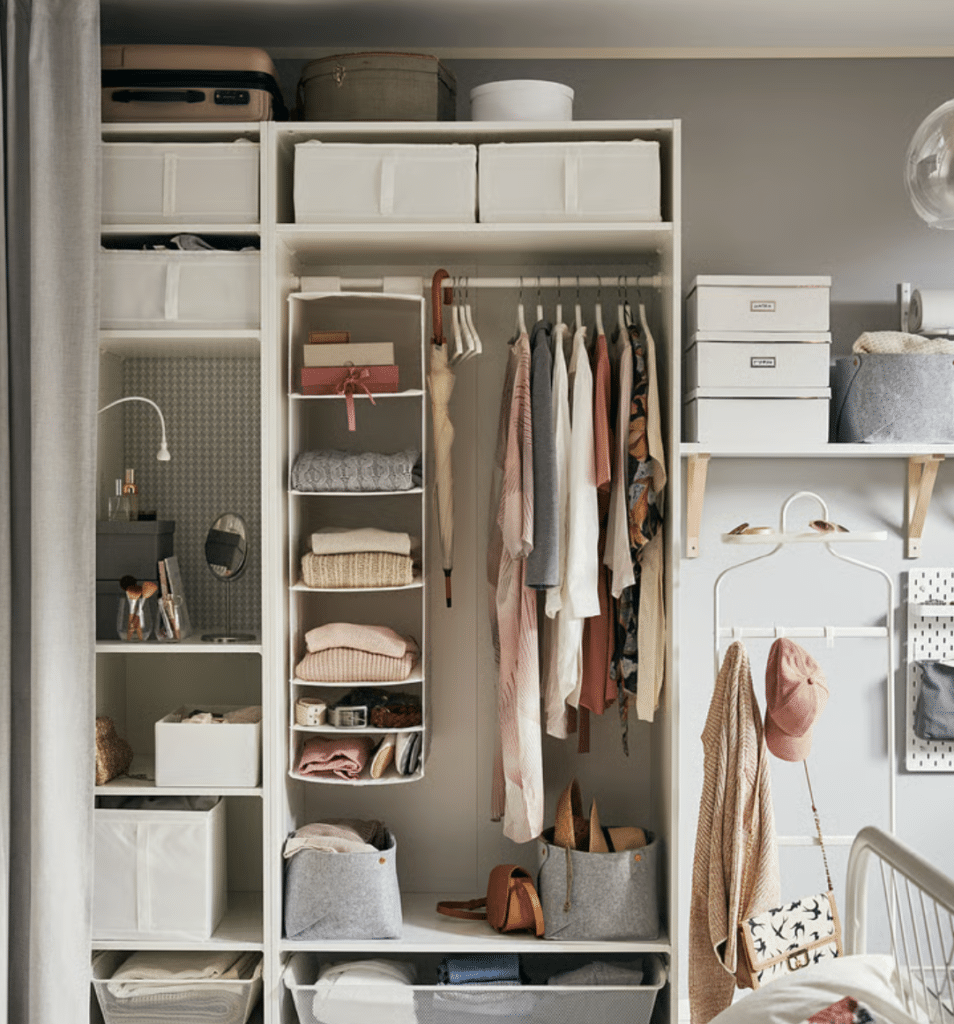
I used IKEA PAX frames, which I already owned, and rebuilt the interior using a combination of solid pine IVAR shelves cut to fit and a few thrifted linen fabric panels as soft dividers. The whole interior now smells faintly of the cedar blocks I tuck into the corners.
For sustainable closet organisation, the honest advice is this: fewer categories, not more storage. I went from seven shelf sections to four. Tops, bottoms, layers, and everything else. The IVAR pine shelves I treated with raw linseed oil hold the weight perfectly and haven’t warped once in two years.
For the bedroom itself, I use an IKEA NORDKISA open wardrobe with a linen curtain I sewed from offcut fabric. It’s a proper, sustainable bedroom styling solution that cost me almost nothing beyond the frame, which I bought secondhand.
The morning light falls across the linen in a way that actually makes me want to get up and get dressed. That might sound like a small thing. It isn’t.
The Sustainable IKEA Hacks for Home Organisation I Wish I Had Started With
If I could go back, I’d start with the IVAR shelf system before anything else. It’s untreated pine, which means it’s genuinely natural, takes oils and waxes well, and feels nothing like a standard IKEA flat-pack. It’s been used for eco home organisation by people who care about materials for years, and for good reason.
I’d also stop trying to match everything. The slightly imperfect combination of oiled pine, seagrass, and old linen feels more honest than any curated shelfie. It also lasts longer because each piece can be replaced individually.
One thing I got wrong early on: I bought IKEA organisers to organise my IKEA storage. It sounds obvious when written down, but it added more plastic to a system I was trying to make less plastic. The fix was to go back to basics. Glass jars. Fabric pouches. Corkboard offcuts. Things that actually belong in a zero-waste lifestyle at home.
These sustainable IKEA hacks for home organisation aren’t about achieving a perfect room. They’re about building a home where the organisation itself stops requiring your constant attention.
The clutter didn’t disappear overnight. But somewhere around month three of living with these changes, I noticed I stopped looking for things. Everything had a place, and that place made sense. That’s the real result of sustainable IKEA hacks for home organisation done properly.