
 Eco Home Editor
Olivia
Olivia covers eco homes, small spaces, and minimalist interiors with warm and natural sustainable ideas.
See more from Olivia
•
0 Comments
•
Verified by EcologyMag Team
Eco Home Editor
Olivia
Olivia covers eco homes, small spaces, and minimalist interiors with warm and natural sustainable ideas.
See more from Olivia
•
0 Comments
•
Verified by EcologyMag Team
Written by Olivia. This article may include some images sourced from third-party sites to support content quality. For full details, see our Image Credits page.
Last Friday, I was standing in my bathroom that morning, surrounded by more than five empty plastic bottles, and I said that something had to change in this bathroom for sure.
I want to share what I actually did, what worked, and what surprised me, too.
In this article
- Why the Materials You Choose Matter More Than the Aesthetic
- How I Replaced Plastic Without Turning My Bathroom Into a Zero-Waste Performance
- Lighting Changes That Cost Almost Nothing and Made a Real Difference
- Plants in the Bathroom and Why I Was Wrong to Avoid Them
- Textiles and the Detail Work That Ties It All Together
- What I’d Tell Anyone Starting Their Sustainable Bathroom from Scratch
Why the Materials You Choose Matter More Than the Aesthetic
Most bathroom styling advice starts with colour palettes and tile trends. For me, in a sustainable bathroom, the material is the decision.
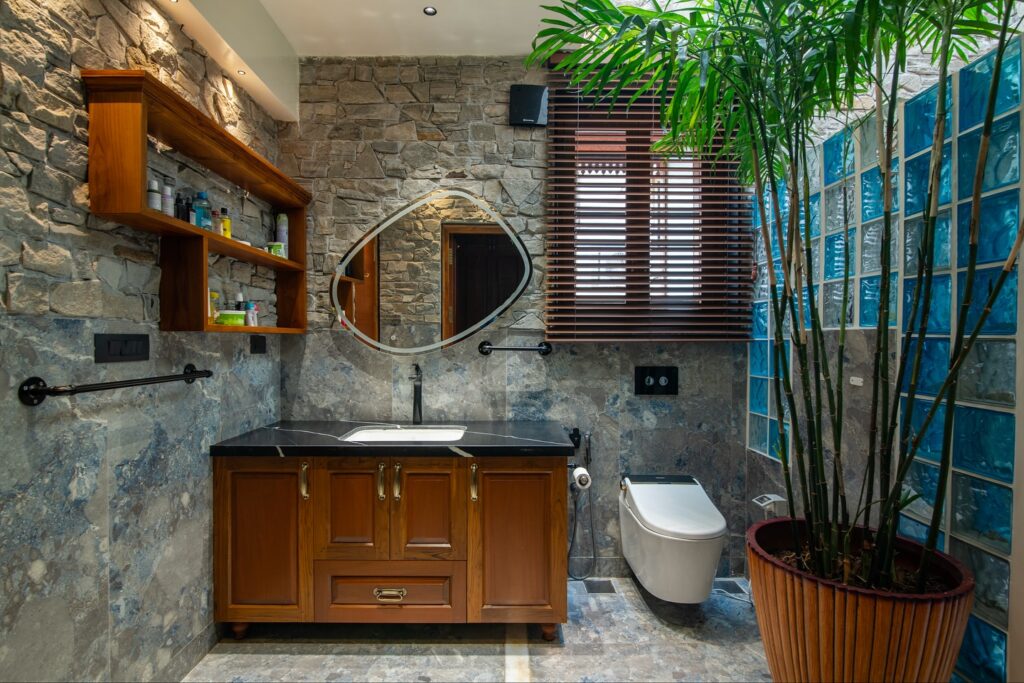
Bamboo, reclaimed wood, cork, linen, and glass are the materials that actually hold up when you’re thinking about environmental impact together. Not all of them are cheap. But most of them are cheaper than replacing plastic fixtures every three years.
Bamboo was my starting point. I replaced a plastic toilet brush holder, a soap dispenser, and a small shelf unit with bamboo alternatives. They cost me less than the plastic versions I’d owned, and they’ve lasted longer.
Cork is underrated. I added a cork bath mat instead of a synthetic rubber one, and it’s one of the best decisions I made in the whole project. It dries faster than cotton. Cork is harvested without cutting the tree down, which makes it one of the most eco-friendly bathroom materials available.
What to do with the walls and floors if you’re not renovating
Not everyone can rip out tiles. I couldn’t. But there are still meaningful changes you can make to surfaces without any construction involved.
I used a natural clay paint on one wall. It’s low VOC, and it regulates moisture, which can help in a small bathroom with poor ventilation. The colour I chose was something between warm sand and pale stone.
For floors, I already had ceramic tiles, and I kept them. Instead, I added the cork mat and a small woven seagrass basket near the door.
How I Replaced Plastic Without Turning My Bathroom Into a Zero-Waste Performance
There’s a version of the sustainable bathroom conversation that can feel a bit exhausting.
Here’s what I actually did. I used things up first. When a plastic bottle ran out, I replaced it with a solid alternative or a glass refillable bottle.
The items that made the most difference for me were:
- A glass soap dispenser filled with a bulk-bought concentrated liquid soap
- Shampoo and conditioner bars stored in a small ceramic dish
- A bamboo toothbrush holder and a set of compostable cotton buds
- Reusable cotton rounds instead of single-use cotton pads
- A refillable glass spray bottle for cleaning
None of these required a lifestyle overhaul. They just required replacing things one at a time as they ran out. That’s how low-waste living actually works in practice.
What surprised me most was how much less cluttered the bathroom felt once the plastic was gone. Glass and bamboo take up the same physical space, but they don’t create the same visual noise for sure.
Lighting Changes That Cost Almost Nothing and Made a Real Difference
I had a fluorescent tube light above my mirror for years. It made everything look slightly green, and it hummed. Replacing it with an LED strip that mimics natural light was the single fastest improvement I made to the whole space.
LED bulbs use roughly 75% less energy than incandescent bulbs and last up to 25 times longer.
If your bathroom has a window, use it. I moved my small mirror to sit directly opposite the window and started noticing how much I didn’t need the overhead light until after dark.
Plants in the Bathroom and Why I Was Wrong to Avoid Them
For years, I assumed plants didn’t belong in bathrooms. Too damp.
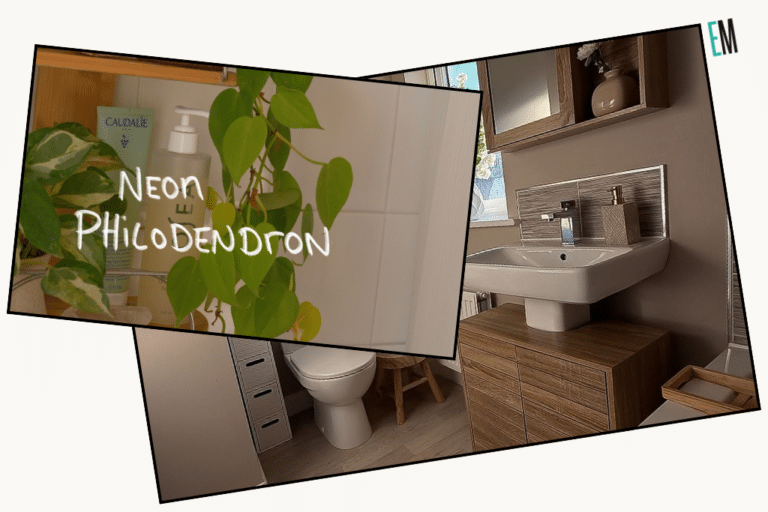
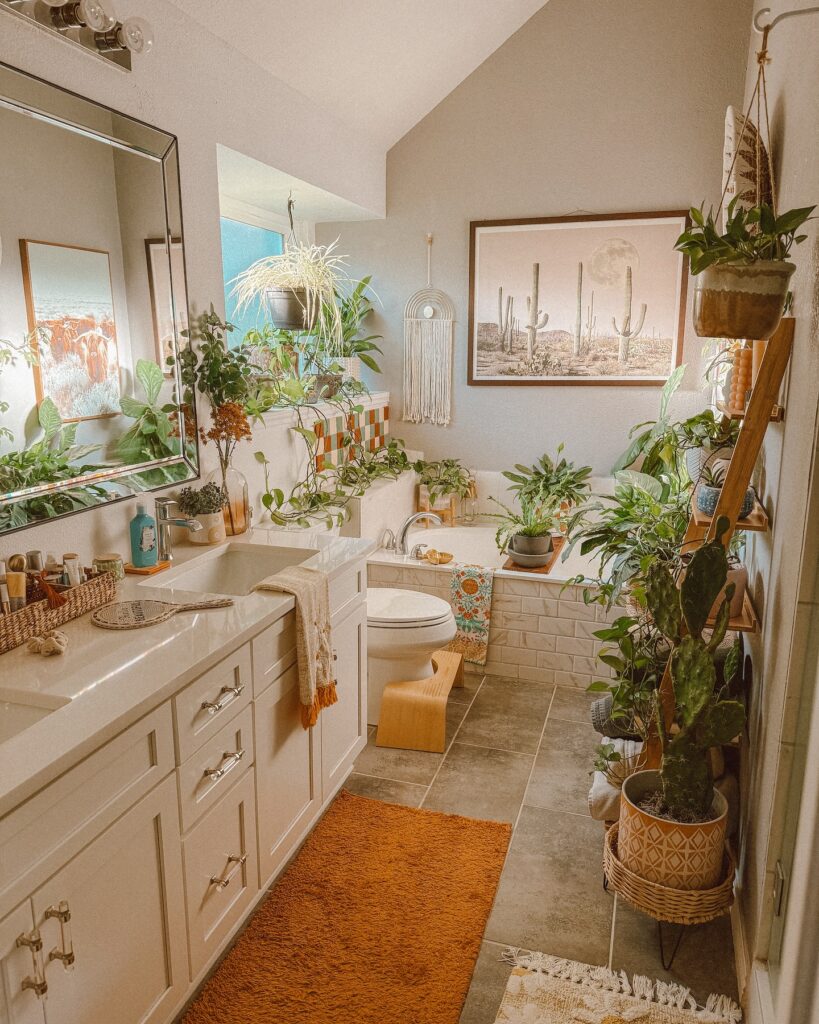
Certain indoor plants for sure thrive in bathrooms. Pothos, Boston ferns, peace lilies, and certain orchids all love the humidity. I now have a small pothos trailing along the shelf above my bath and a single peace lily on the windowsill.
What I didn’t expect was how much they changed the feeling of the room
Plants also improve air quality, nd connect the room to the broader idea of a sustainable home.
How to keep bathroom plants alive without becoming obsessed
Water them when the soil feels dry about an inch down. Don’t mistreat them obsessively.
The pothos has been watered maybe once every two weeks. It’s never looked better.
Textiles and the Detail Work That Ties It All Together
Towels, bath mats, storage baskets. These are the things people buy once and never think about again. But in a sustainable bathroom, they’re worth a little bit of consideration.
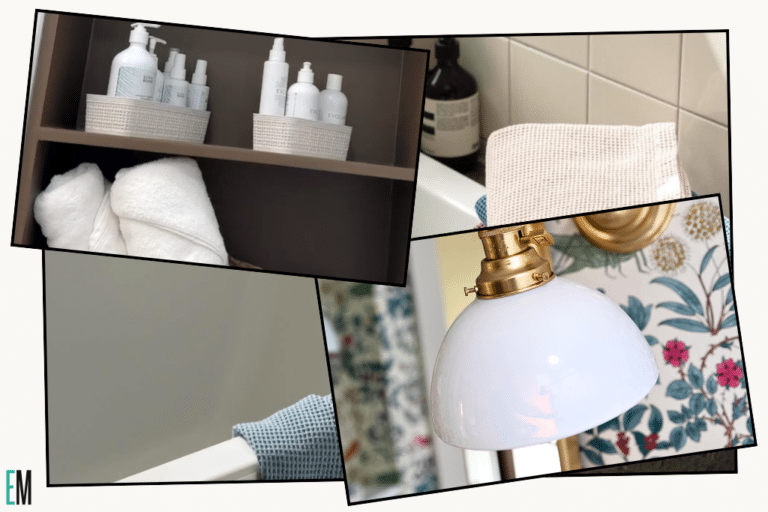
I replaced my old synthetic towels with organic cotton ones. They’re not more expensive than mid-range standard towels. I also found that they dry faster.
Sustainable living in a bathroom doesn’t require expensive linen from a boutique eco brand. A good organic cotton towel does the job just as well.
For storage, I use wicker baskets and a small reclaimed wooden crate I found at a market for almost nothing.
What I’d Tell Anyone Starting Their Sustainable Bathroom from Scratch
The most sustainable thing you can do in any room is use what you already have, properly and fully, before you replace it. always remember that.
Once you’ve cleared the clutter and used things up, the replacements you bring in can be better, more considered, and longer lasting. A minimalist bathroom it’s about only having things that earn their place.
And here’s what I’ve noticed, now that the bathroom is mostly how I want it to be. The mornings feel different, of course, even my husband notices that. That quiet alignment between a space and the values behind it is something I didn’t expect to notice. But now we notice it every single day.
A few things worth keeping in mind
- You don’t need to do everything at once. One material swap per month adds up to a genuinely different bathroom inside a year.
- Bamboo and cork are the most affordable entry points for natural materials. Start there.
- Low VOC paints are available in most hardware stores now, not just specialist eco shops.
- GOTS certified organic cotton is the clearest signal that a textile meets real environmental standards.
- A single healthy plant does more for the atmosphere of a bathroom than almost any styling decision.
Article Note
A sustainable bathroom isn’t a finished project you complete and photograph. It’s just a room that gets a little more like you with every small decision you make.